

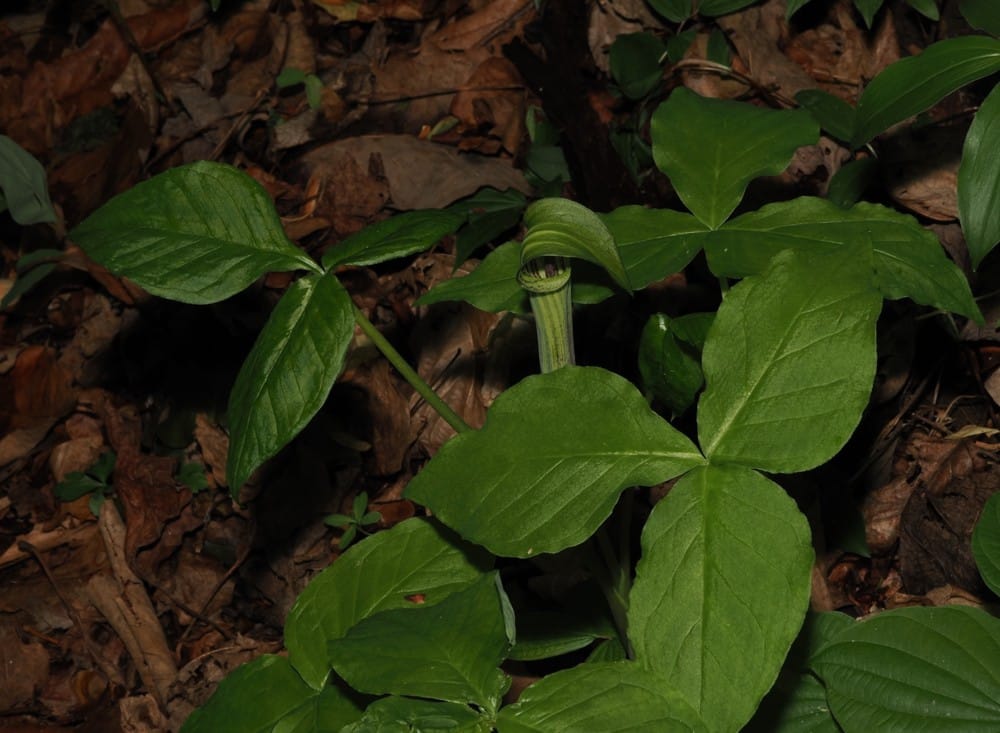
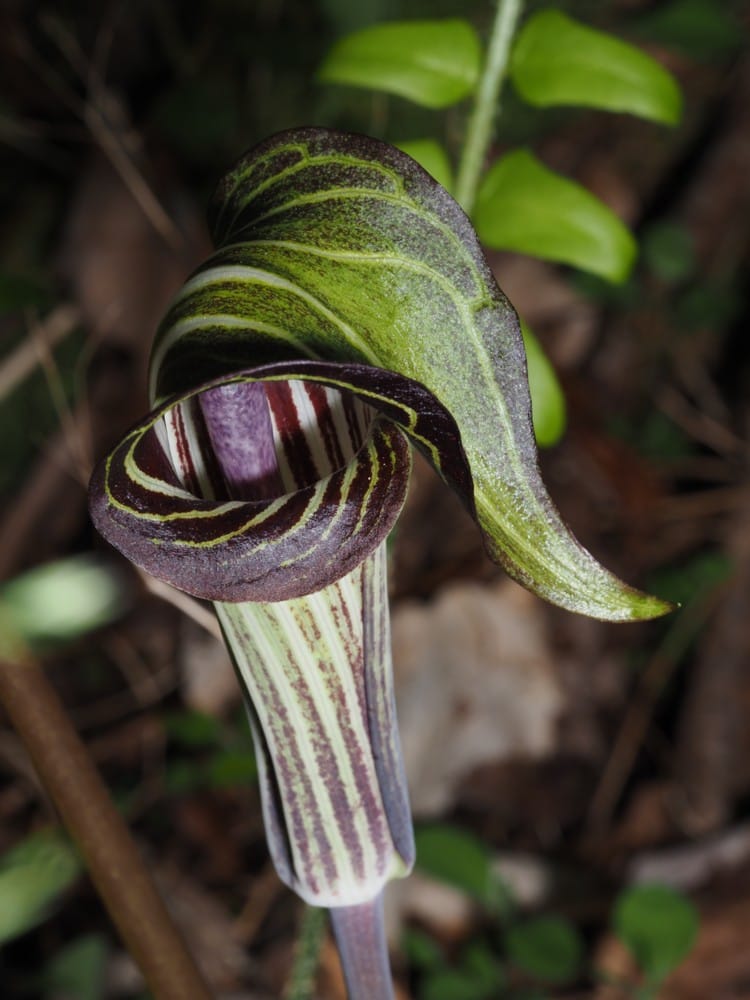
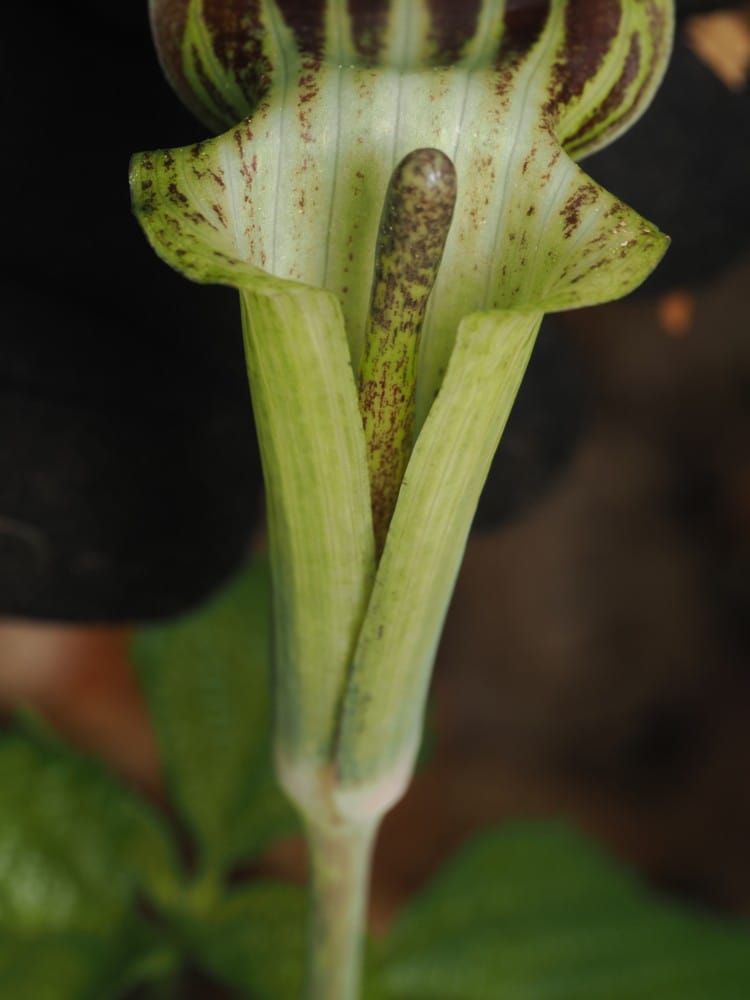
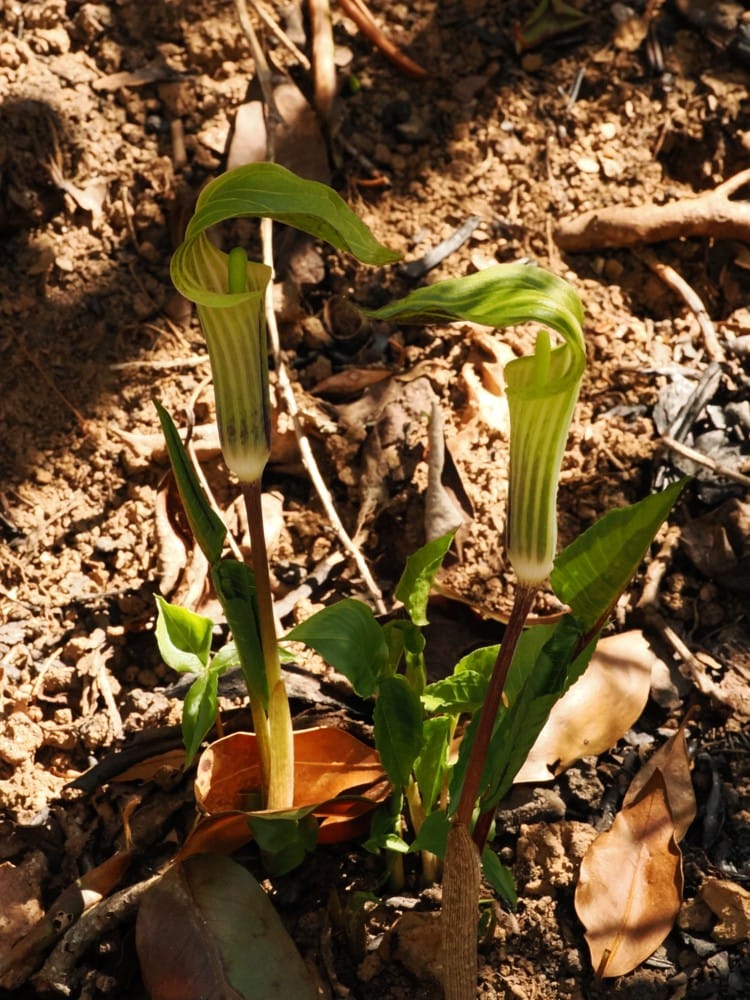
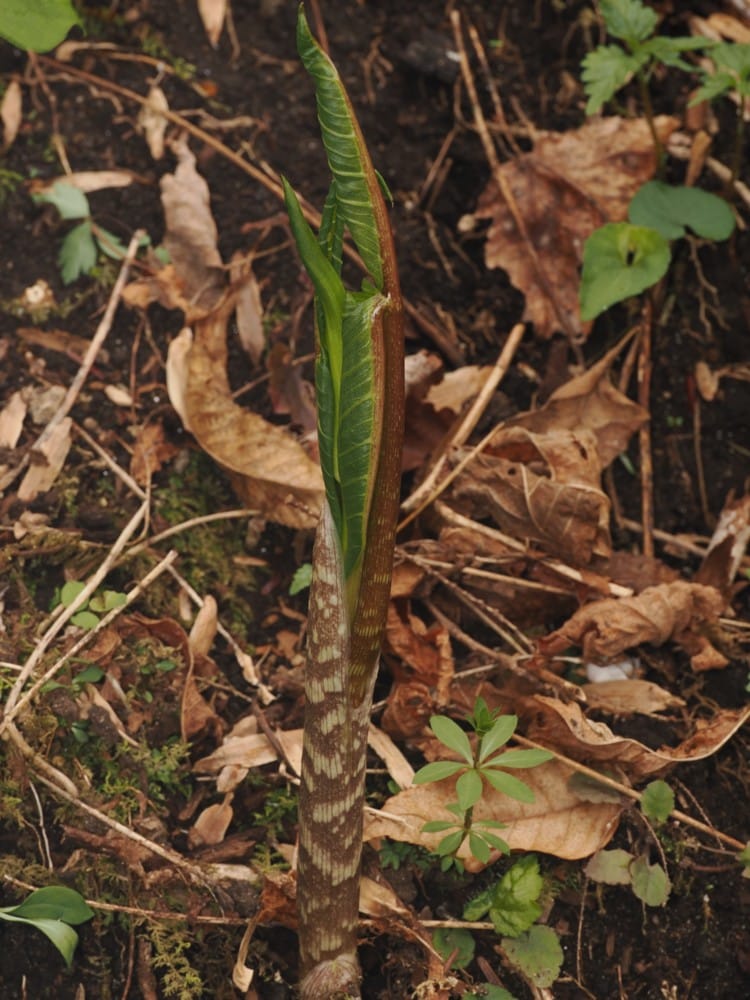
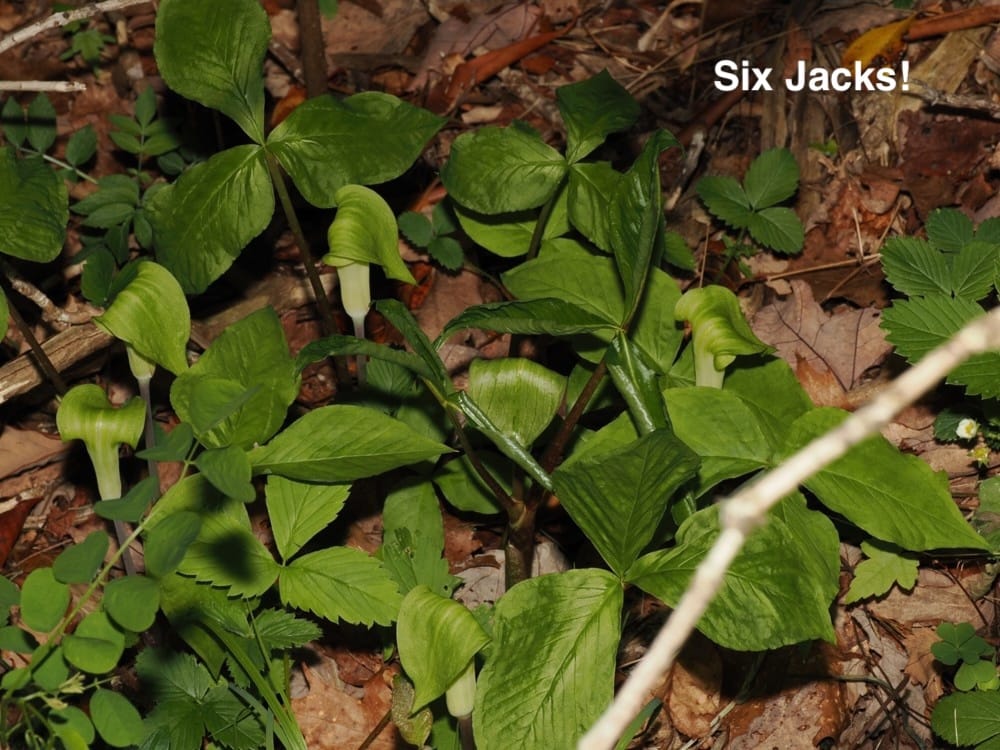
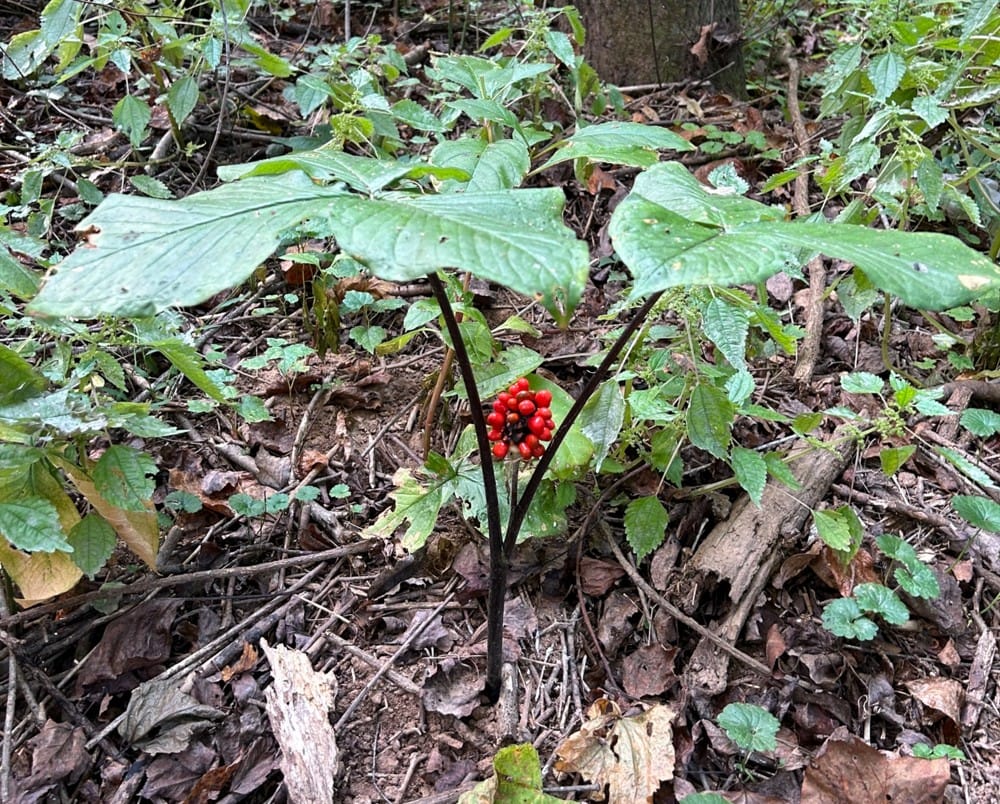
The many phases and looks of Jack-in-the-Pulpit
Where the flowers are
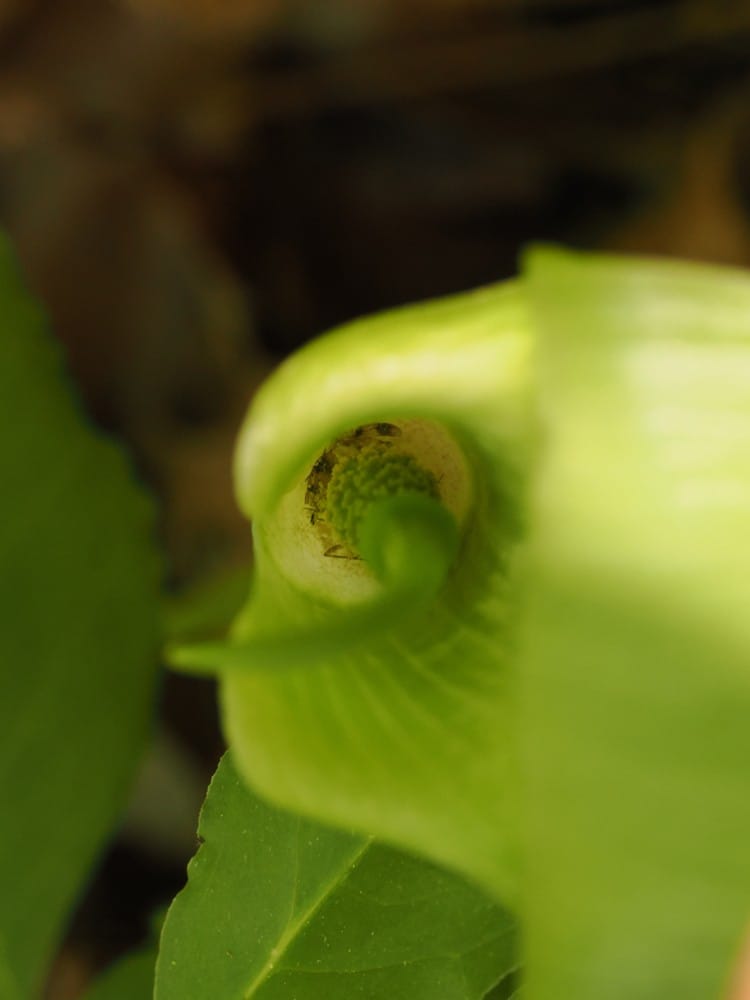
Jack is easy to find, rising proudly above the cylinder of his pulpit, neatly shielded from the rain by the overhanging canopy. But his function is not to be pollinated, but instead to make flying within the cylinder impossible for his gnat congregation, and perhaps to help disperse scent. The action is all hidden away inside the pulpit's base. In this sequestered domain, either male or female flowers reside. They’re down where the visitors unwillingly congregate and spend some time... perhaps even the rest of their time.
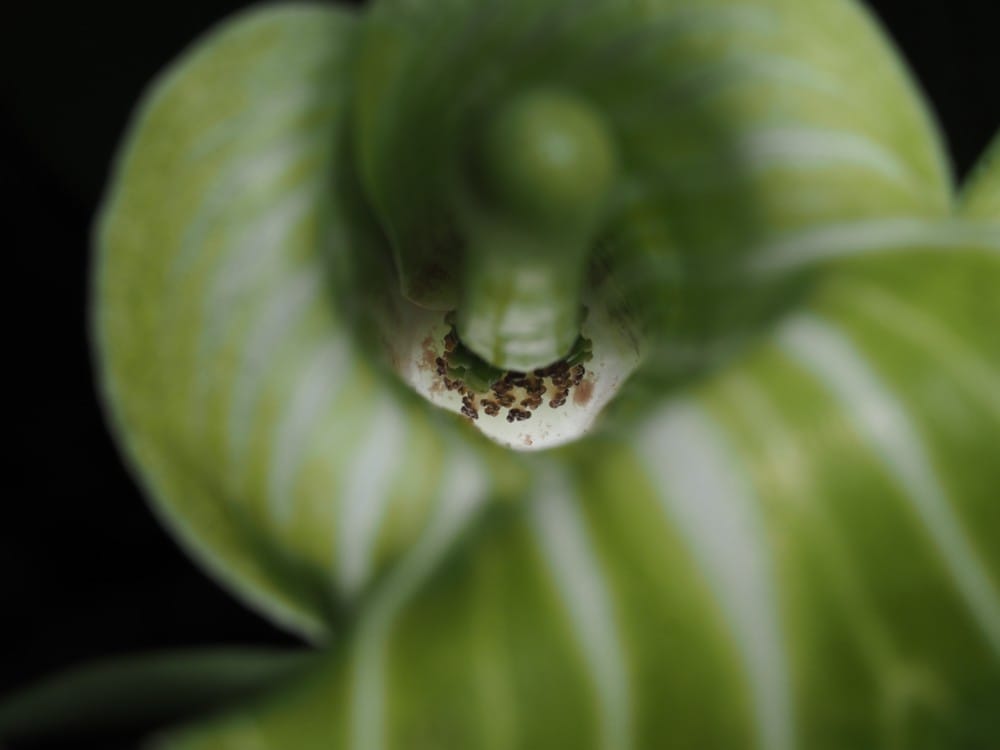
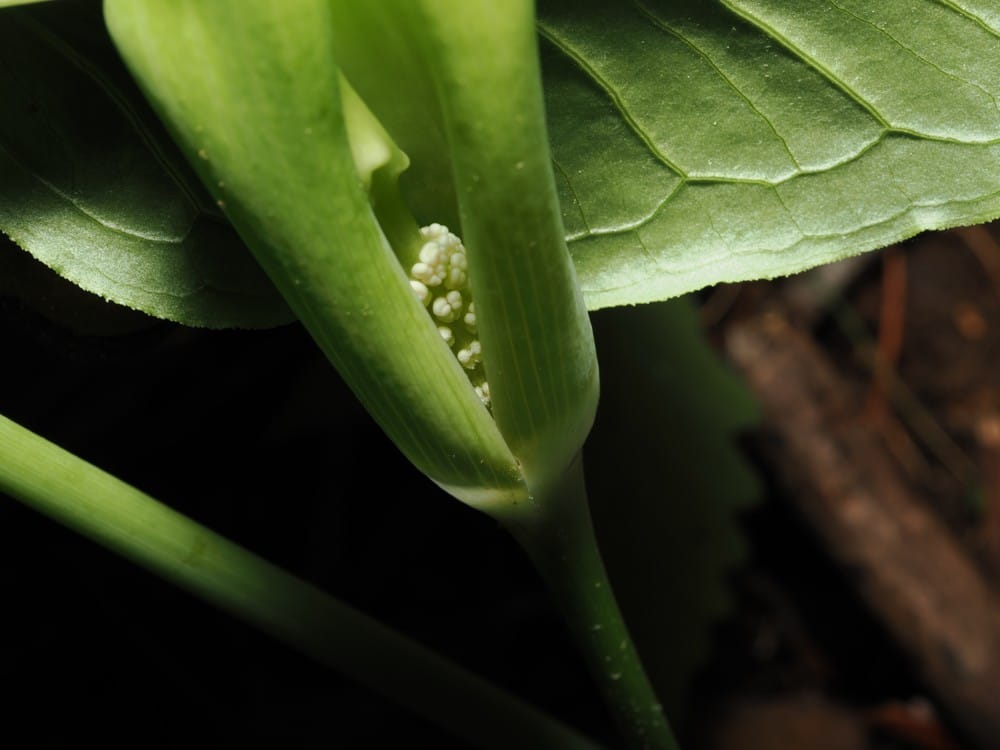
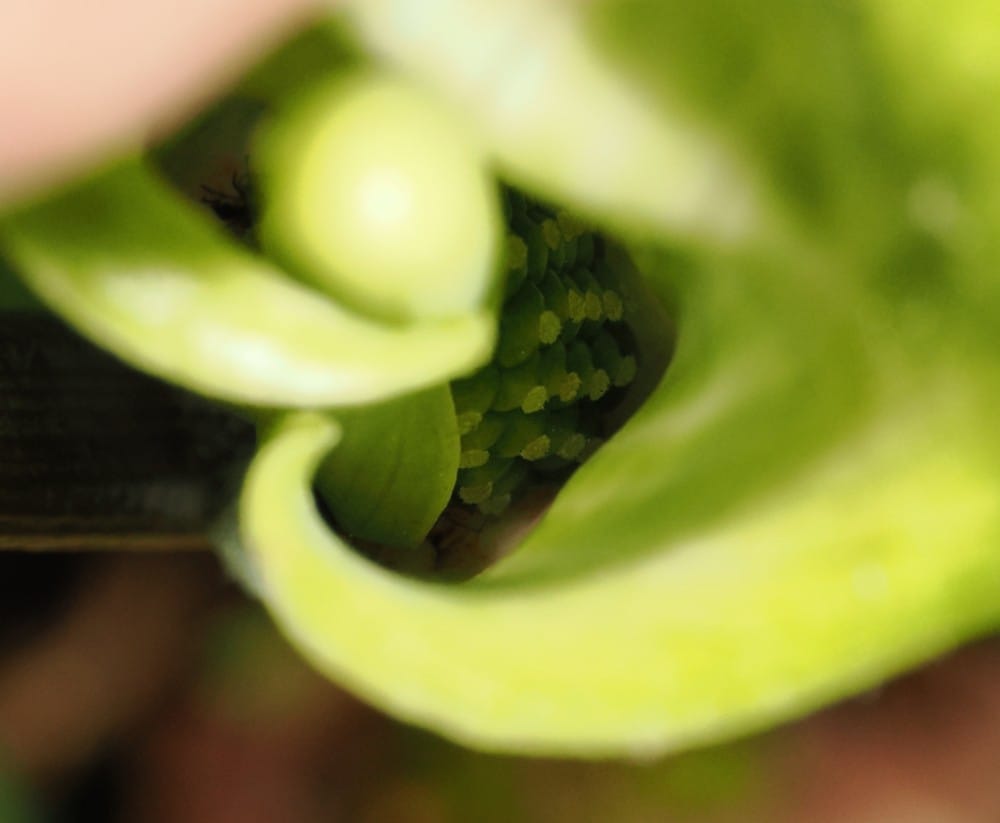
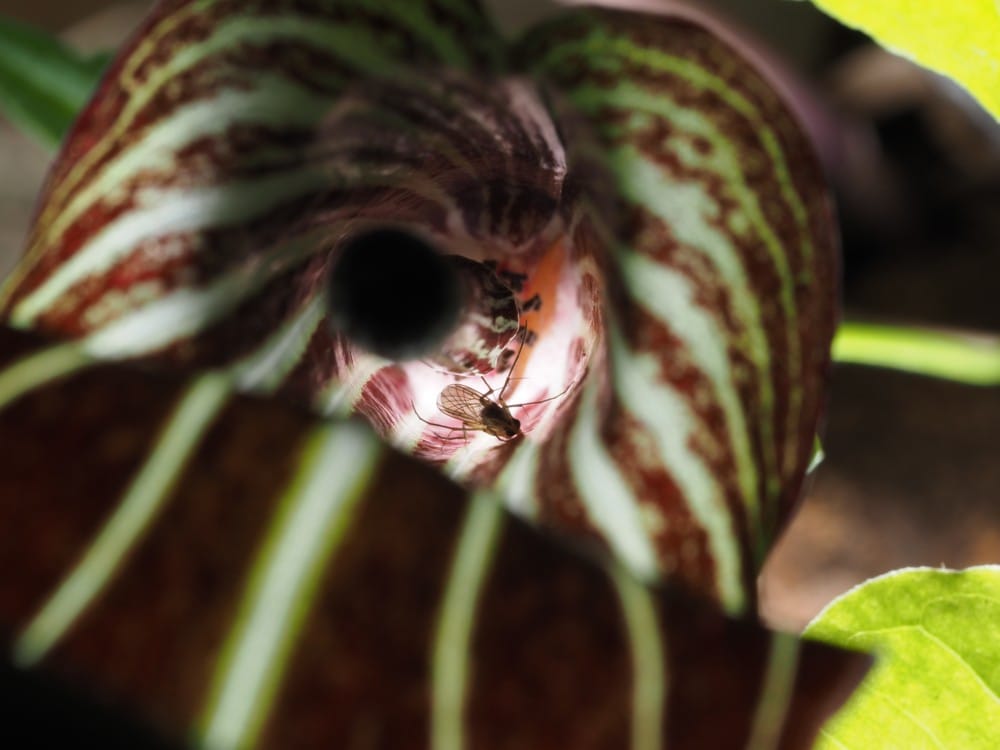
'down the pulpit' shots of two male and one female Jack-in-the Pulpit flowers. In both cases, they're at the very bottom, and emerge from Jack's central stalk.
Two sexes… that change
Being female is a lot of work. Besides the usual business of attracting pollinators, one must create and provision each seed and generate whatever ‘advertising’ is needful for its distribution. Jack-in-the-pulpits respond to acknowledge these difficulties in a very clever way. If a plant has a good year and stores away a lot of energy, the next year it will 'choose' to be female, and take on the burdens of making berries. Otherwise, it will settle for the easier job of making pollen and leaving the tough jobs to a hoped-for nearby female. For this reason, young plants are likely to be males at their first blooming (often in their 3rd year). Read on to learn of other differences between the sexes, including how to tell them apart!
Offsite pics of more female flowers.
Who’s invited to the party?
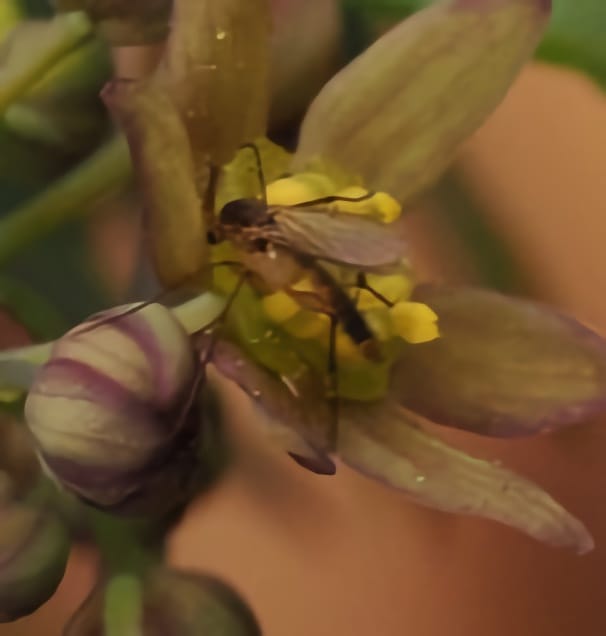
Despite the large, conspicuous jack-and-pulpit appearance, the flower is catering to fungus gnats. The brownish-purple color seen in the striping is common in gnat-attracting flowers (and in flowers that attract other rot- and carrion-seeking guests). There’s an ‘alluring’ (if you’re a fungus-eater) scent, but it doesn’t seem to be detectable to our poor senses. The tubular structure of the ‘pulpit’ constitutes a highly refined trap and ‘holding pen’, as you’ll read below.
The fate of the guests
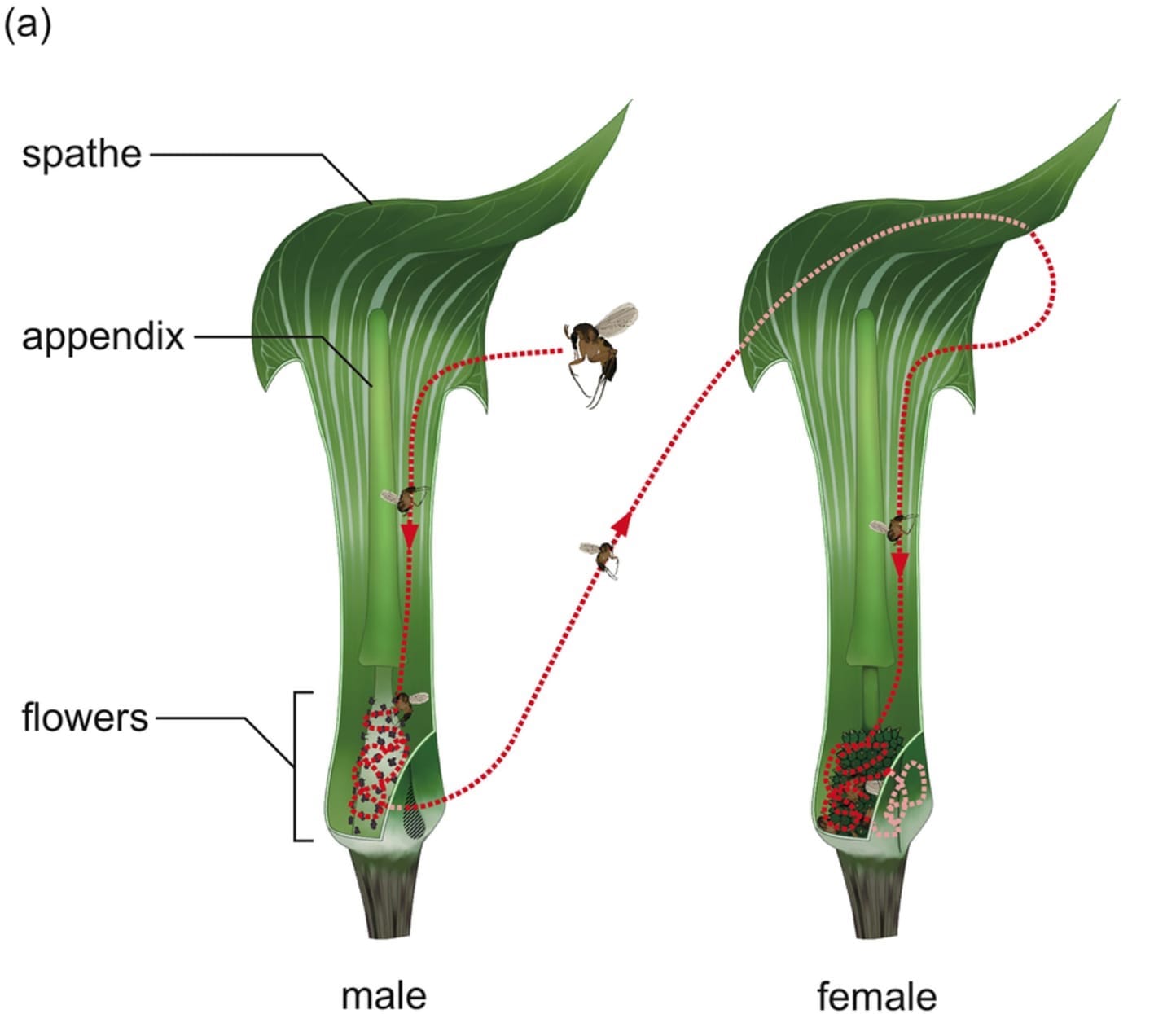
Alas, Jacks aren’t the kind of party gnats should want to attend. Despite the engaging odor, nothing rotting nor edible is to be found at the bottom of the pulpit. Worse, the walls are slick with wax, and what with Jack filling the center of the chamber, flight isn’t happening. What there is is a whole stack of male or female flowers ringing Jack’s base… and a way out, maybe. If you think about the ‘rhythm of pollination’, pollinators are generally intended to pick up pollen at one plant and then fly off to another to deposit it on awaiting female parts (stigmas). If one has shed pollen successfully onto a gnat, it’s now imperative that the gnat fly forth and pollinate. So there must be a way out of the trap (once a guest has spent sufficient time wandering about to pick up a good load of pollen). MALE pulpits are designed for this. There’s a small (gnat-sized!) opening at the base of the pulpit (facing forward) through which a determined gnat can squeeze, thus allowing it to live to pollinate another day.
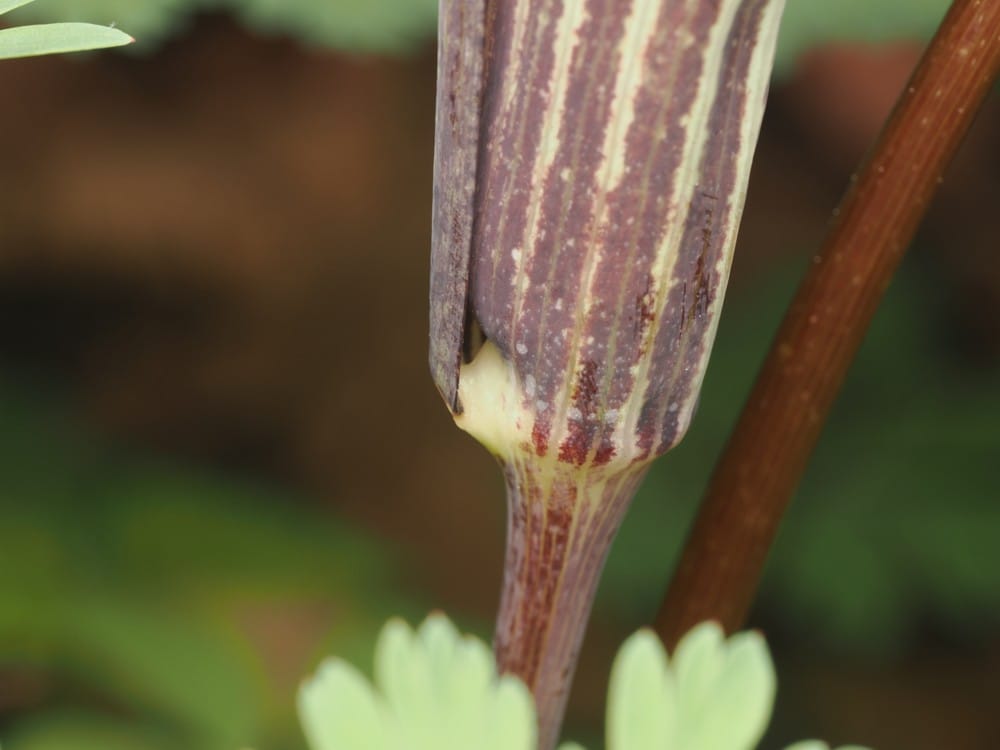
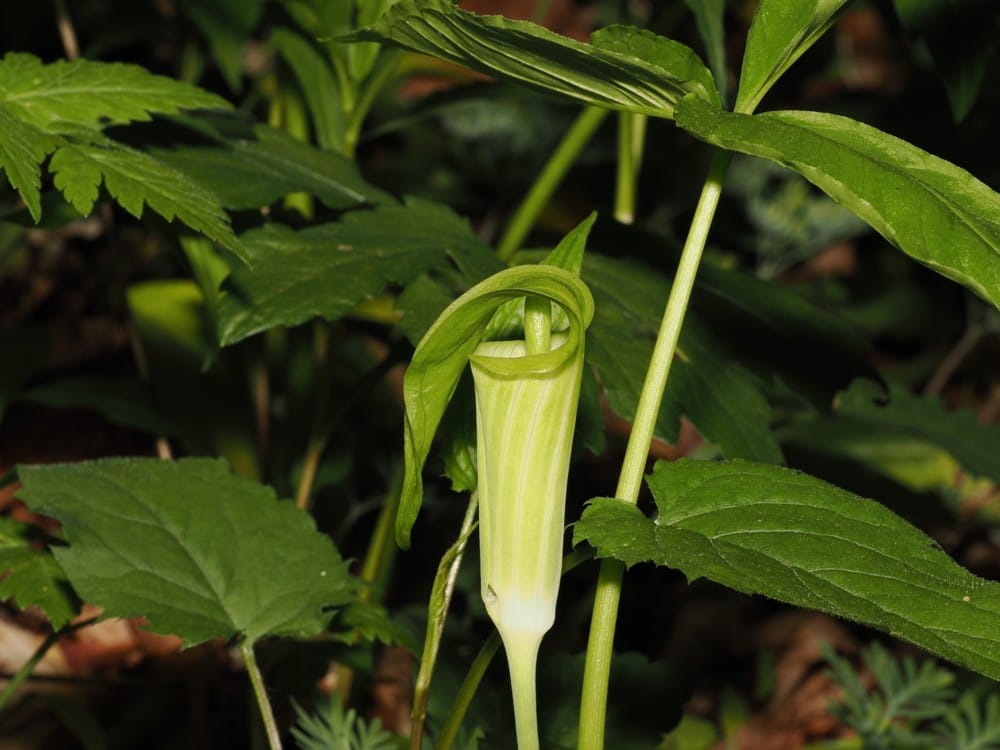
Things aren’t so great in the female quarters. If a Jacqueline has lured in a fungus gnat (hopefully covered with pollen from a previous visit), the SOLE purpose of that gnat (from Jacqueline’s point of view, at least) is to have all the time in the world to transfer that pollen to the waiting stigmas. What possible advantage could there be for the gnat to escape… ever? So there's essentially no exit and the gnats tend to accumulate in the pulpit, having died in what the plant views is a good cause…
The summary figure below is from "Arisaema: Pollination by Lethal Attraction" by Kenji Suetsugu in Plants, People, Planet
The fruits of the labors
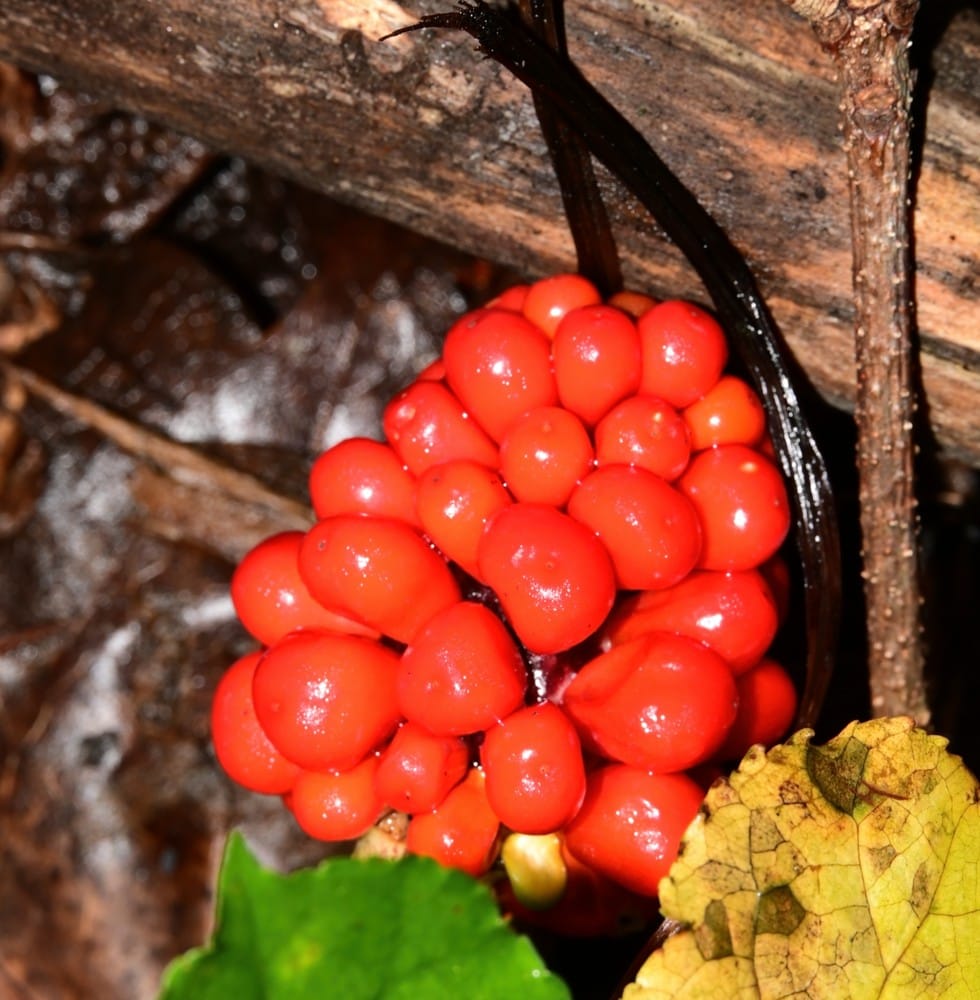
Of course, making seeds is only half the battle—there’s still the task of getting those seeds delivered to some new and fertile location. So the seed, in its turn, must be made alluring and packaged for whatever delivery means is desired. In the case of Jack-in-the-pulpit, this means a sweet, juicy coating and a bright red surface. In nature, red is often a signal to birds that something good awaits; box turtles share similar visual equipment and have been known to eat Jack-in-the-Pulpit berries. Birds and small mammals are also reported to consume the bright red delights. In this light, it may be worth noting that the tall, shading Jack leaves often die and wilt while the bright red berries are on display.
Mechanisms of self-defense
Being eaten is nobody’s idea of a good time. Essentially all plants defend themselves in some way; for Jack-in-the-Pulpit and its cousins, this is achieved by filling its tissues with oxalic acid, which is not only a poison, it’s also one of the substances that can accumulate in the form of kidney stones. So look, but leave be!
Cousin’s War: Jack v. John v. Dragon
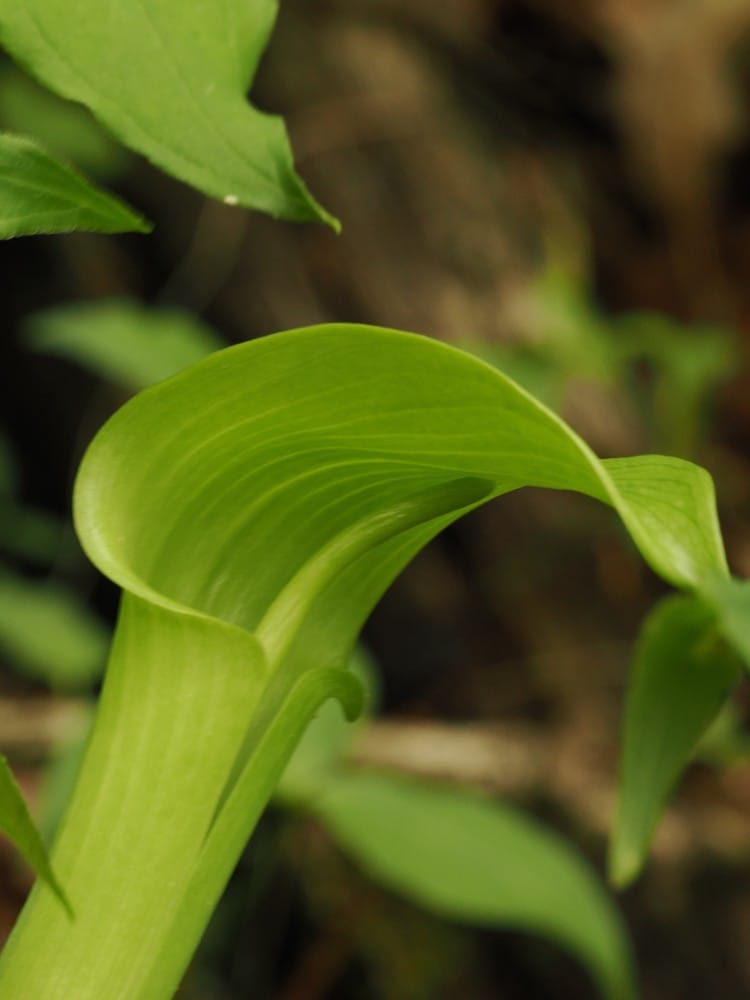
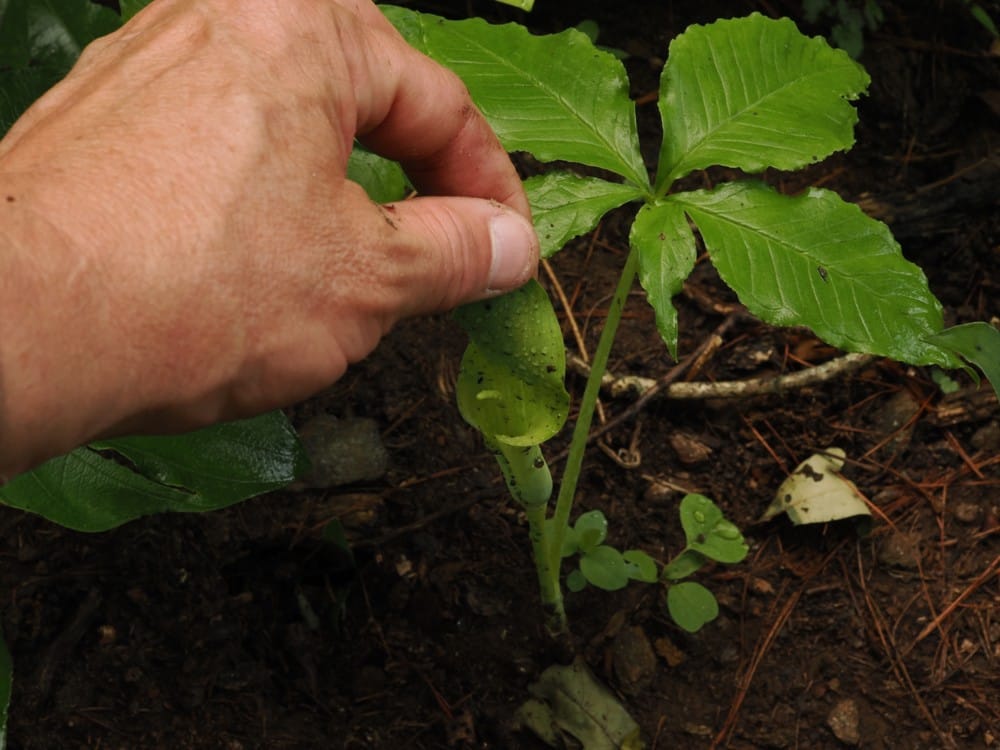
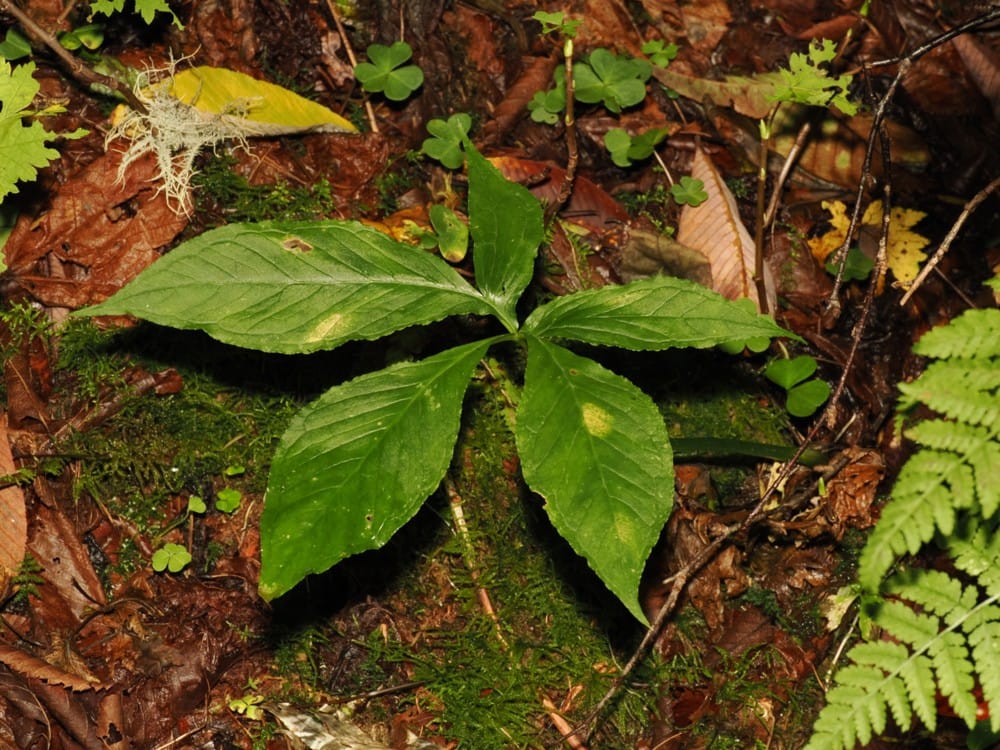
You’ve met Jack; now for his cousin, Prester John, aka Arisaema quinatum (also known as Preacher John). Besides having 5-part leaves in the canopy, there are a couple of noteworthy differences. Prester John prefers a less-flashy pulpit; the purple-brown coloration is generally absent (though it’s pretty variable amongst Jacks). Does this mean that it’s not seeking gnats? Good question, but I’ve not found any info; I shall be examining female Prester Johns to see who is trapped within! One picture I have shows bigger-than-gnat wings within, but this could be the work of a lurking spider instead of a pollination-killing... or accidental killing of a bug the plant doesn't care about.
The other notable difference is the orator. Whereas Jacks tend to be purple, a bit on the plump side and vertical in their pulpits, Johns are green, slender, and distinctly leaning out of their pulpits and towards the audience. Possibly this stance offers a landing spot for pollinators, or aids in scent dispersal. Again, some observation may assist in making the call! I also don’t know if Johns show the escape hatch/no escape dichotomy of the two sexes in Jack-in-the-pulpit.
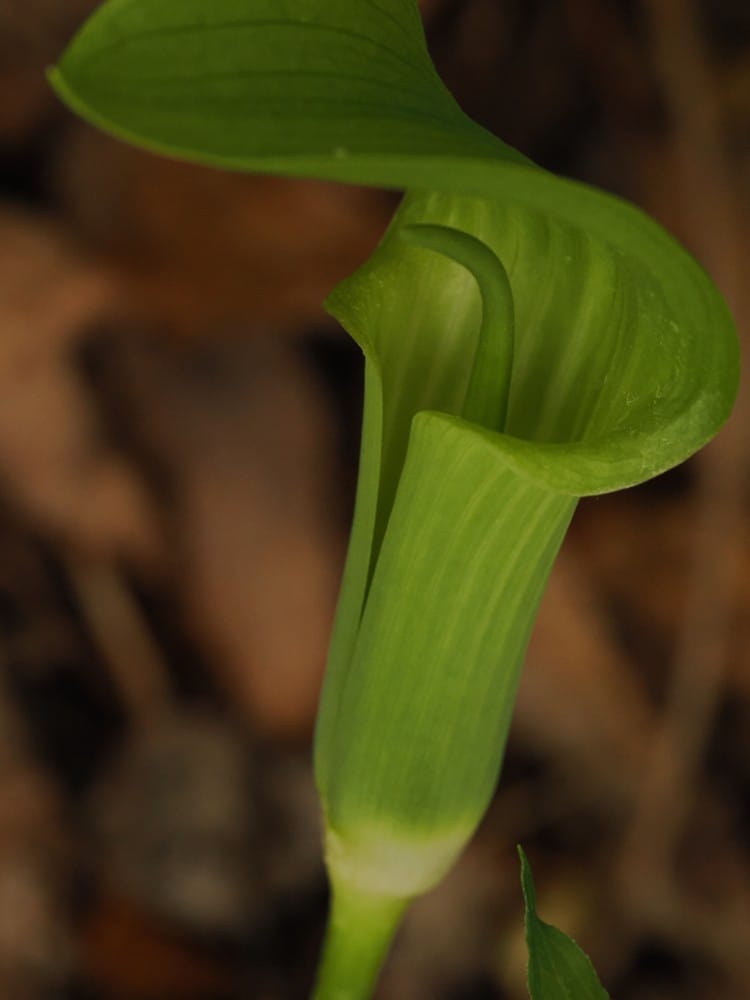
The ‘sticking your neck out’ phenomenon is taken to the extreme in the Green Dragon Arisaema dracontium. I’ve not seen one yet, so the photos in this section are from others. The usual stalk is there, representing Jack, with flowers at the base… and there’s the pulpit, but ‘Jack’ has morphed into a giant, escaping the pulpit and towering over it! This begs the question: “What can be the purpose of such an extended Jack (technically, a ‘spadix’; the pulpit is a ‘spathe target=_blank’).
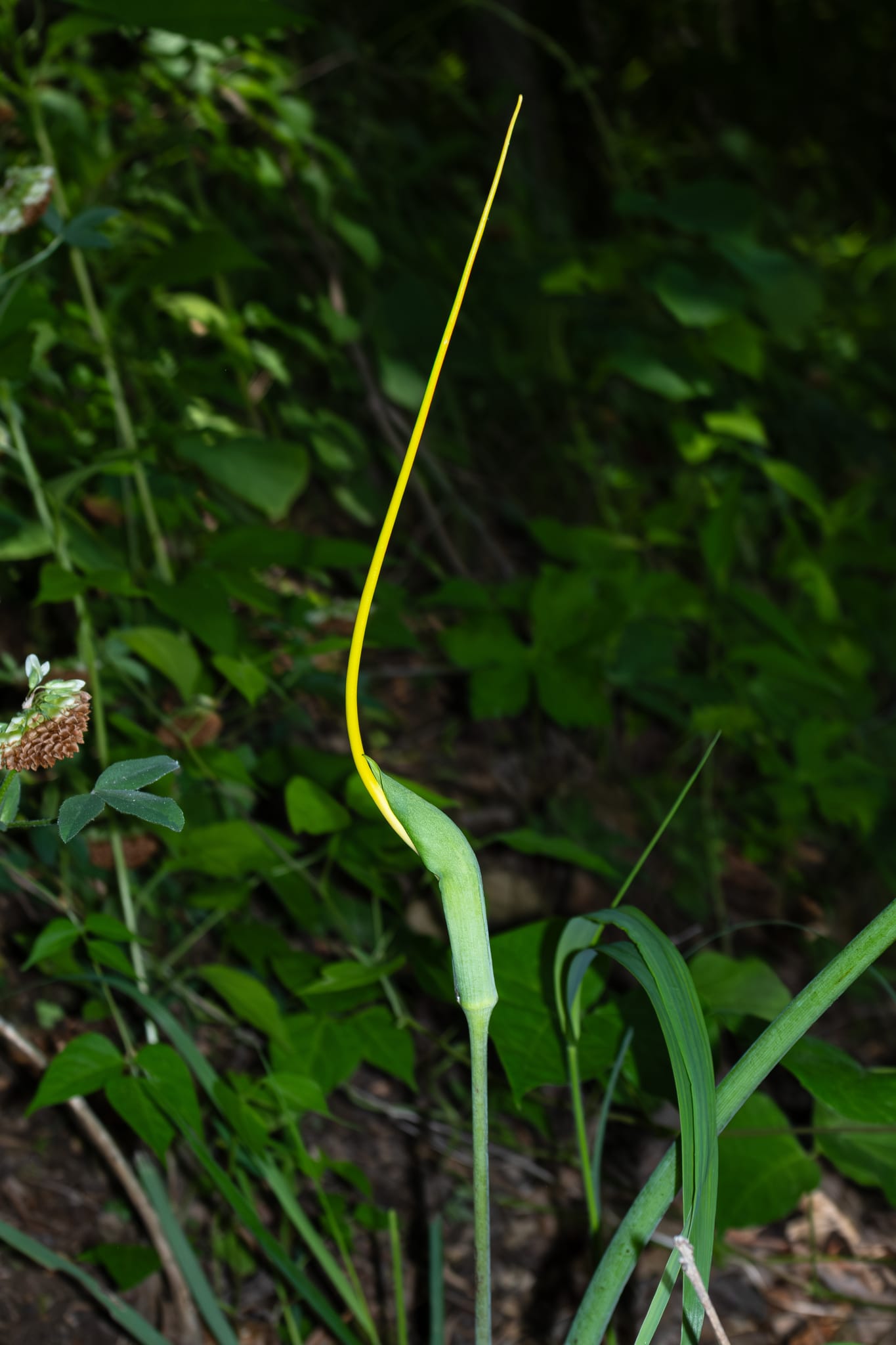
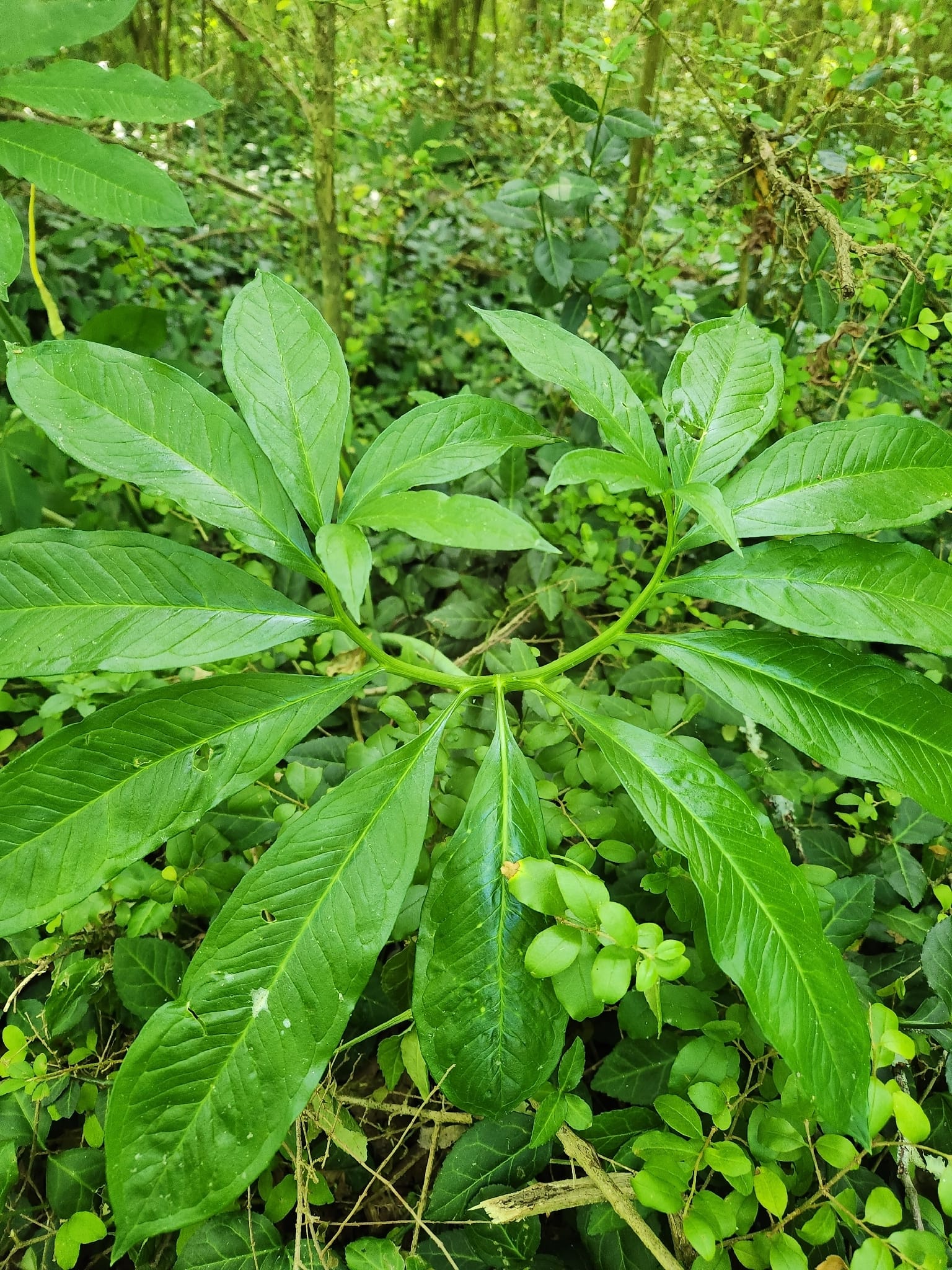
First pic, the flower, by iNat user @NathanAaron; leaf picture by iNat user @Jacks121
I’ll update this page if I come across (or directly observe!) an answer…
Cousin's War II: Advanced Mushroom Mimicry
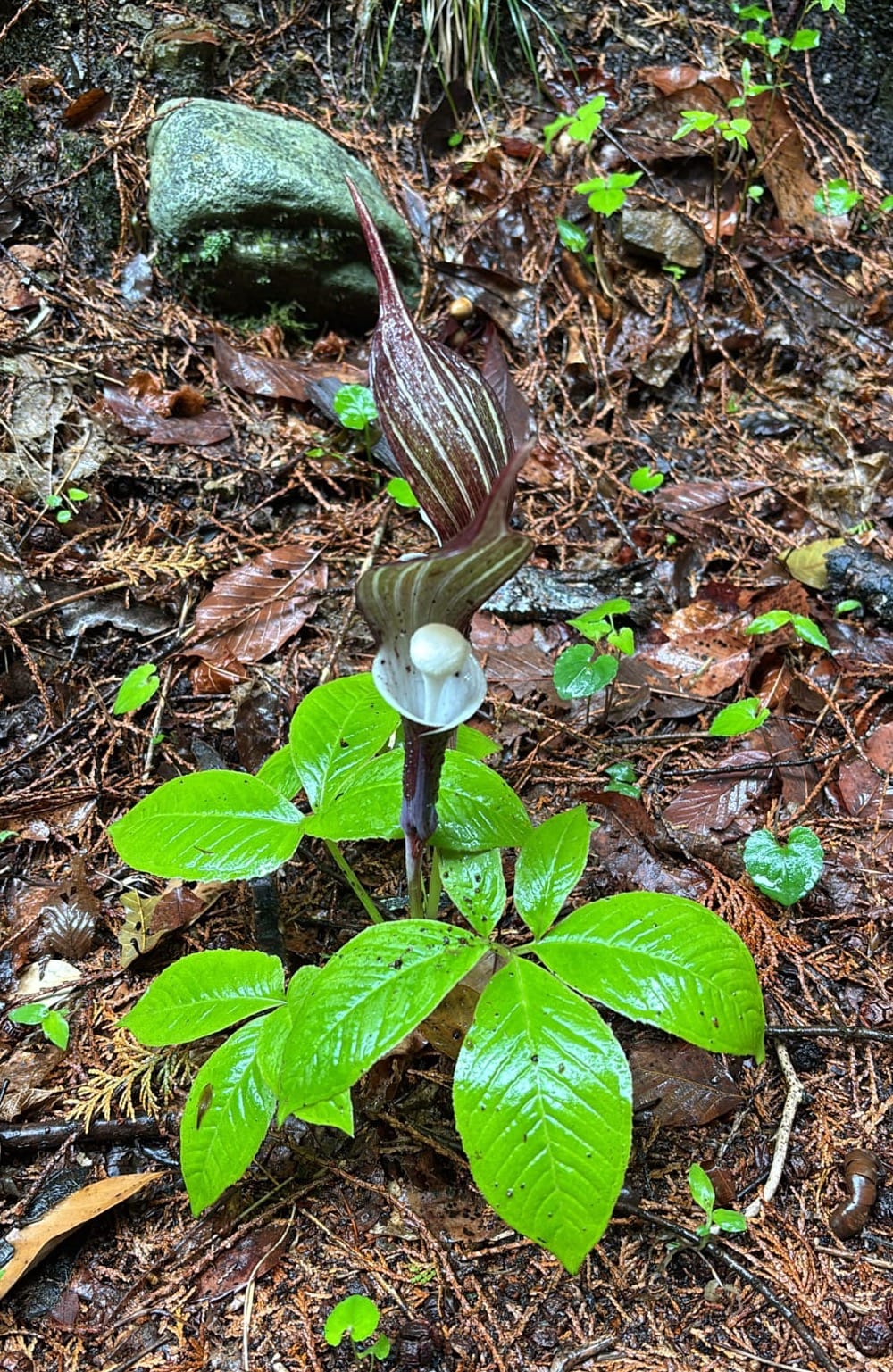
There's a Japanese Jack-in-the-Pulpit that has taken mushroom mimicry to the next level. It's uninspiringly called Japanese Jack-in-the-Pulpit, at least in this country... thus casually disparaging the wealth of Jack species in that country! In Arisaema sikokiana, Jack has evolved into a rather convincing white mushroom!
Further Explorations
In Japan, Jack’s cousins have diversified into many species (all still in the same genus as Jacks, Arisaema); the five below each serve a different species of fungus gnat! Note that there are also some differences in the altitude preferred by each Jack species.
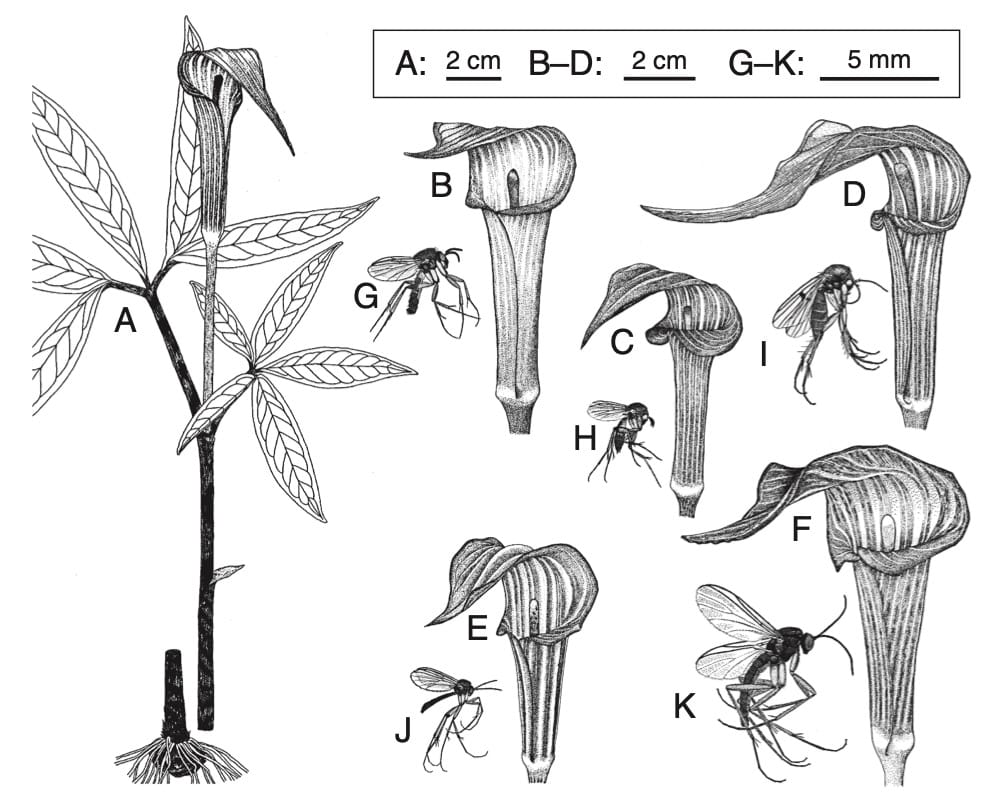
The study is pretty clever—the authors took advantage of the trapping mechanic of female pulpits (‘spathes’)… and recreated it in the male plants by taping over the exit hole! Thus instead of having to spend hours watching individual plants, they just assessed the trapped dead gnats in both male and female plants after the flowers had been open for business for a while!

