

aka Dutchman's pipevine
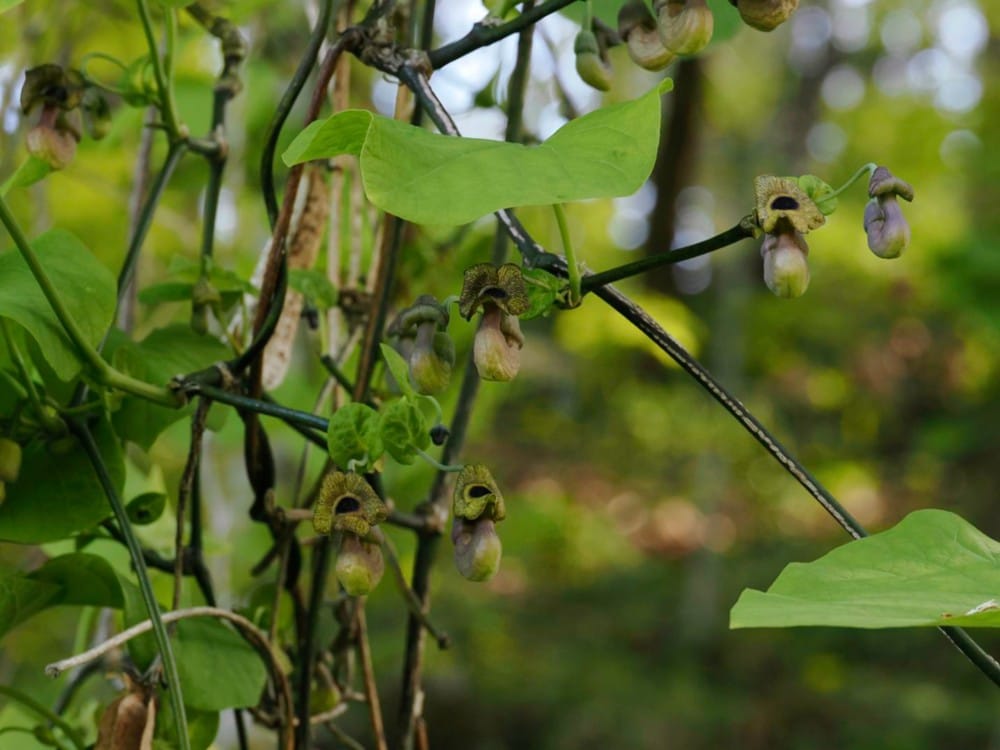
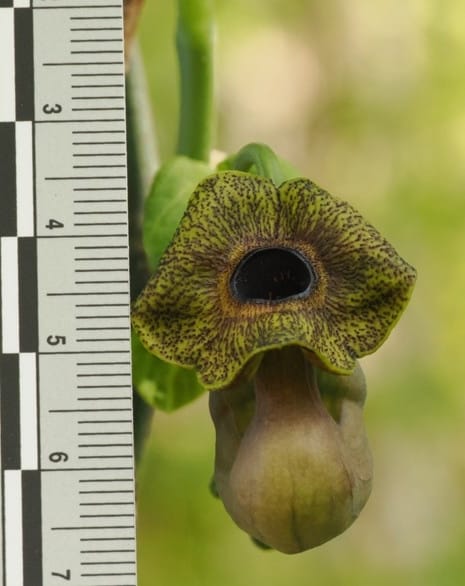
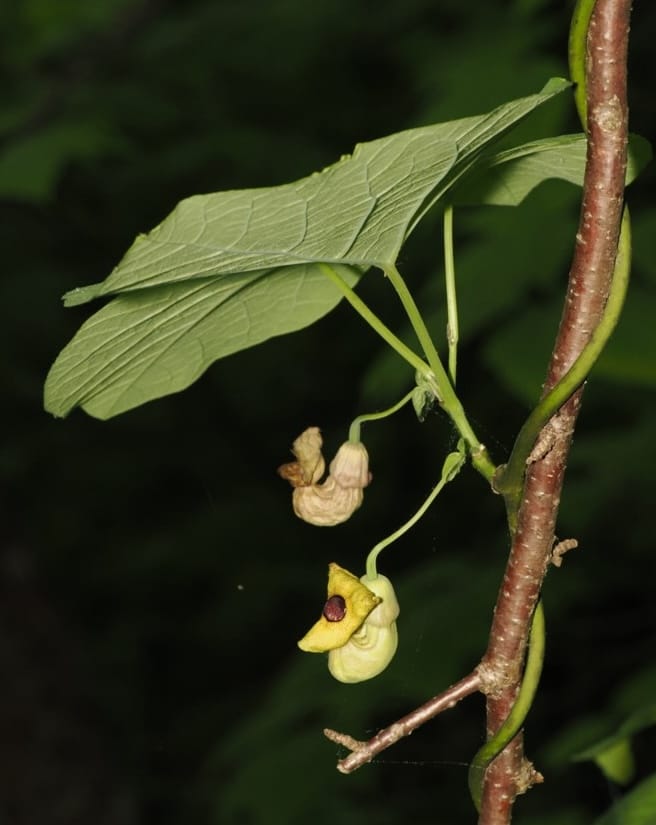
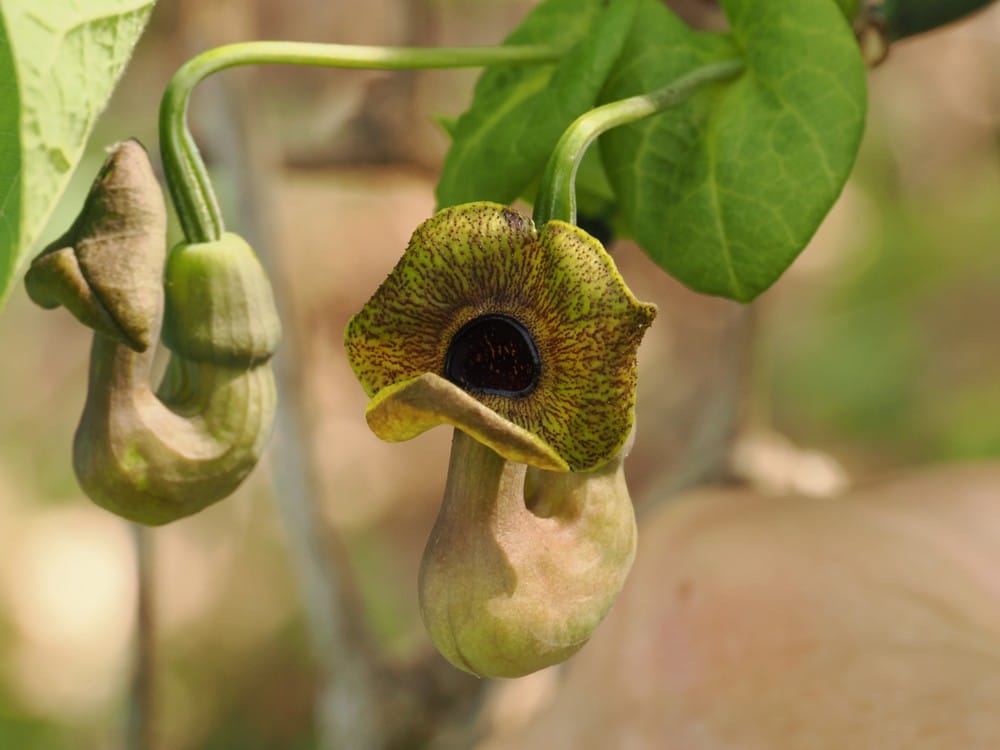
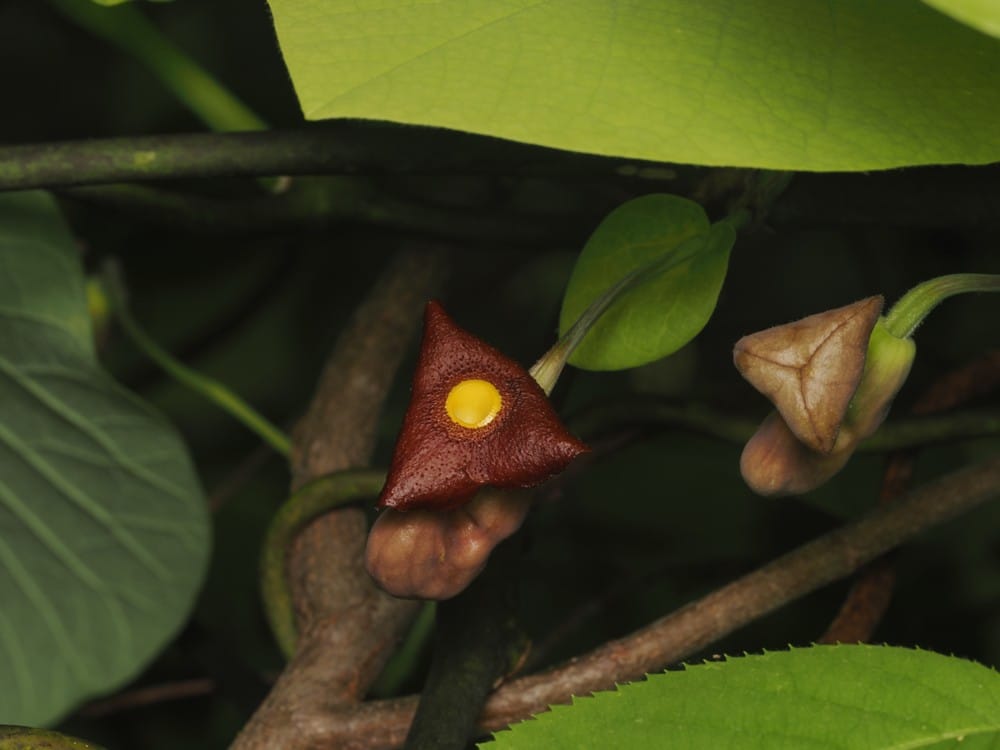
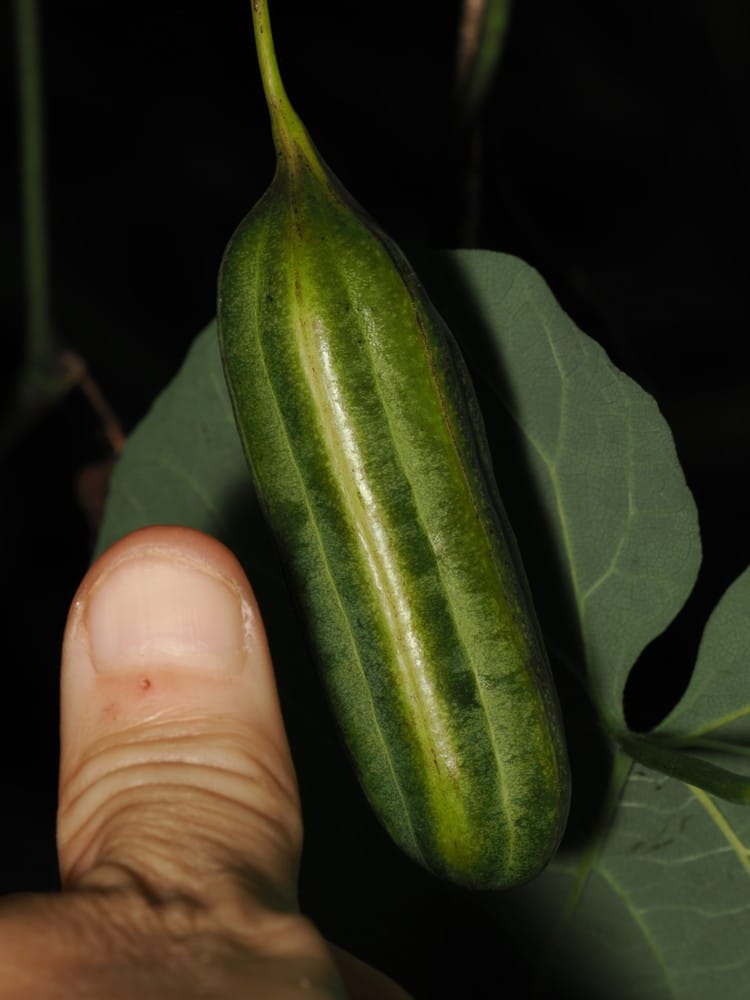
Dutchman's pipe flowers, plant, seed pod
What’s in a Name
a-ris-tuh-LOKE-ee-uh
From Greek aristos, meaning “best” and lochia, meaning “delivery,” in reference to the medicinal use of this plant in childbirth (Aristolochiaceae).
Caution: ‘medicinal use’ often means ‘somebody believed this was useful in X context’, and does not exclude the possibility that it had a side effect of being deadly, cancerous, etc… or didn’t in fact provide the benefit sought.
Where the Sexy Bits Are
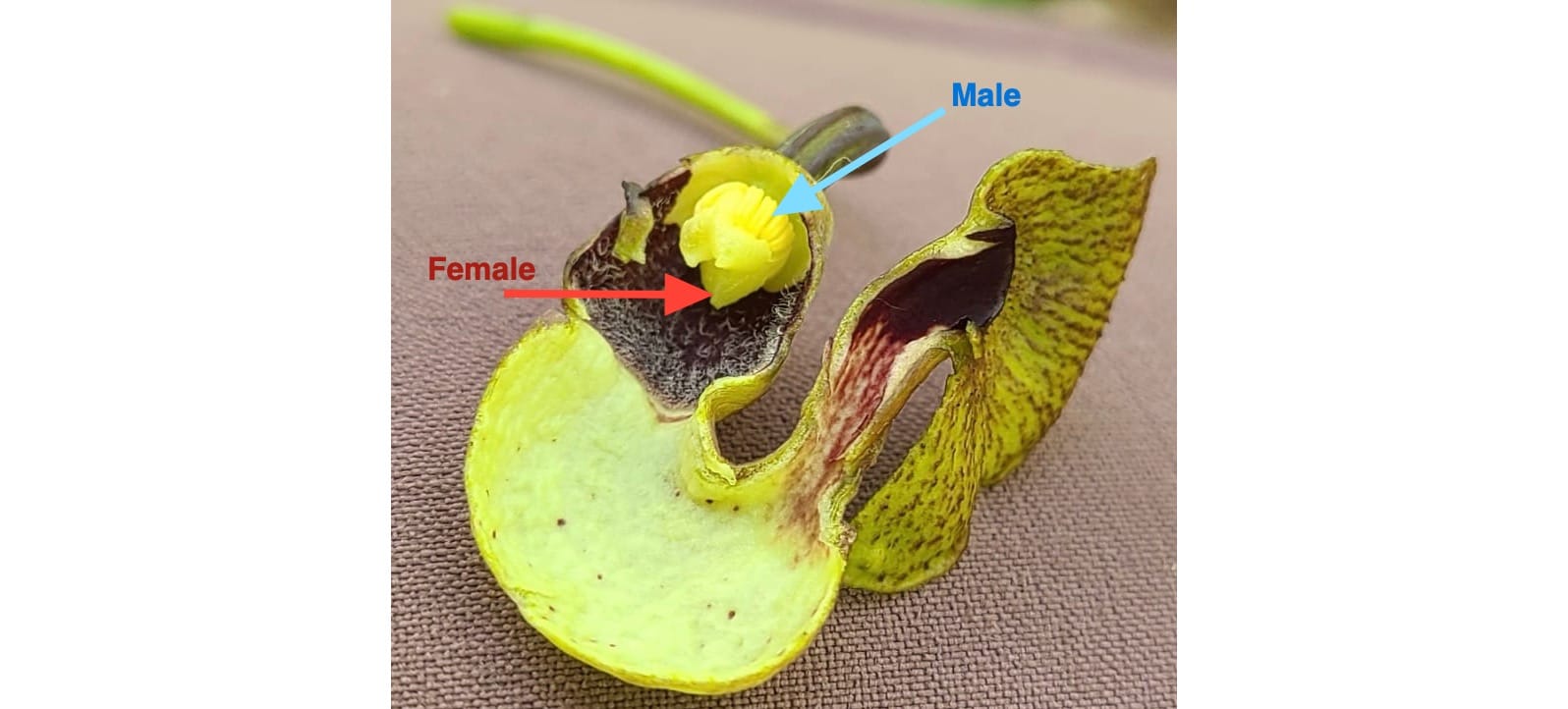
In order to achieve their pollination ends, pipevine flowers create a cave filled not with rewards, but traps. With an opening at the ‘bowl’ of the pipe, the targeted male and female parts (stamens and stigma) are at the other end of the tube—the beginning of the pipestem. In the cutaway view (photo by iNaturalist contributor Claire Jarvis, below), the reproductive structures are the yellow mass at the beginning of the flower (emerging from the stem that starts at top left). The yellow stamen ‘columns’ (striped structure around the perimeter of the reproductive organ) are still immature; the lobes they’re upholding are the receptive female surfaces. The flower 'face' and tube entry point are to the right.
The flower produces smells alluring to flies and is painted in an apparently alluring color I call ‘rotting purple-brown-red’. I believe the general consensus is that this color is reminiscent of rotting meat. This same ‘paint color’ is found in Jack-in-the-Pulpit, Torrey’s Wild Licorice, Canada Wild Ginger, Pawpaw, Toadshade Trillium…
Disclaimer: some of the features and actions described herein are based on reports from others (not only is my smeller not up to snuff, I'm still learning to stop and smell the carrion!). Further, some information is gleaned from closely related species and may not have been studied in Dutchman's pipe vines specifically. I'm working to color the former in orange and the latter in green, as indicated by the text above (not only is my smeller not up to snuff, I'm still trying to stop and smell the carrion!). Further, some information is gleaned from closely related species and may not have been studied in Dutchman's pipe vines specifically. At present, such findings are both reported in italics.
Why Lure the Flies Inside?
No matter how beautiful or beastly, the purpose of every flower is to send pollen to another flower or receive pollen in their turn. Dutchman’s pipe has stumbled upon flies as ideal pollen purveyors, and that’s why its flowers are shaped and colored as they are (that purplish brownish color is often seen in fly- and gnat-attracting flowers using a carrion/rotting food strategy). The flowers add to the enchantment by producing a rotting meat smell (not confirmed by me). Once lured in, flies have a very hard time getting out, giving them lots of time to transfer any pollen they may be bearing onto the female (stigmatic) surface. In Dutchman's pipe, the stigma is large dome located at the very base of the pipe, aka the end of the tunnel. Once pollination has been achieved, the road to egress becomes paved, and the fly is free to make the same mistake elsewhere. The pollinated flower, in turn, inactivates its female surface and the pollen-dispensing male ones mature. As with many flowers, the enticing sights and smells aren’t accompanied by any reward at all.
How the Flies are Entrapped
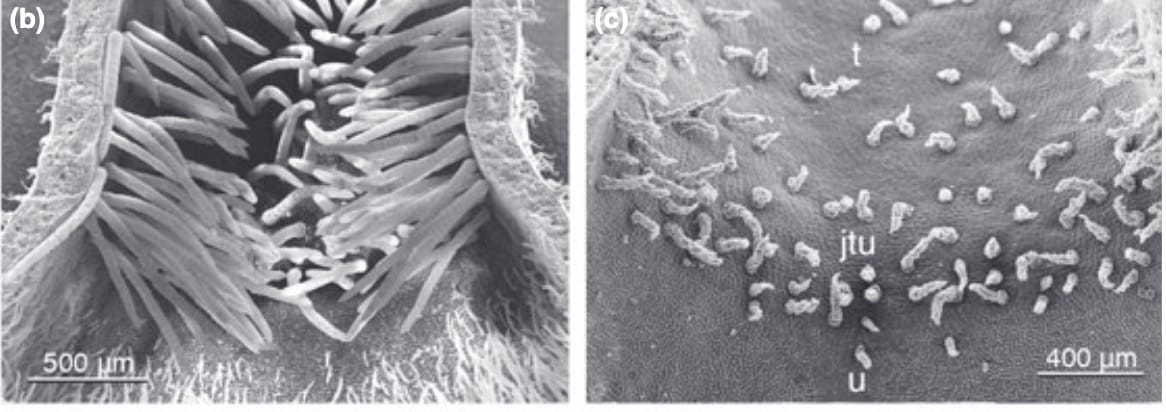
The details of the floral tube are quite striking… and even mechanically intricate. Besides the smell wafting from deep within, the ring of tissue at the very base/end of the tunnel is relatively thin and light-transmitting. Apparently many bugs have a natural ‘go to the light’ instinct, so both light and scent are drawing them deeper within. But now we get to the less optional part of the passage. As the fly goes ever deeper, it finds itself walking over stiff hairs. No problem at the moment, the hairs are pointed inward, so the fly traverses them relatively easily. But if it suffers second thoughts, or eventually gives up searching for raw meat to eat or lay eggs in, there’s literally no way out.
Left image above (from a related species, Aristolochia fimbriata, a South American species): the flower is in its female stage. Note the hairs in the tube (purple) are stiff and permit ready movement in the downward direction, toward the floral chamber. In the top left corner, the starfish shaped female parts are mature and receptive; you can see the yellow male structures outlining the base of the starfish are not yet shedding pollen. In the RIGHT image, the flower is in its male phase, shedding pollen (more easily seen in the upper right-hand corner) and the hairs have emptied of water and relaxed, allowing escape back up the tube!
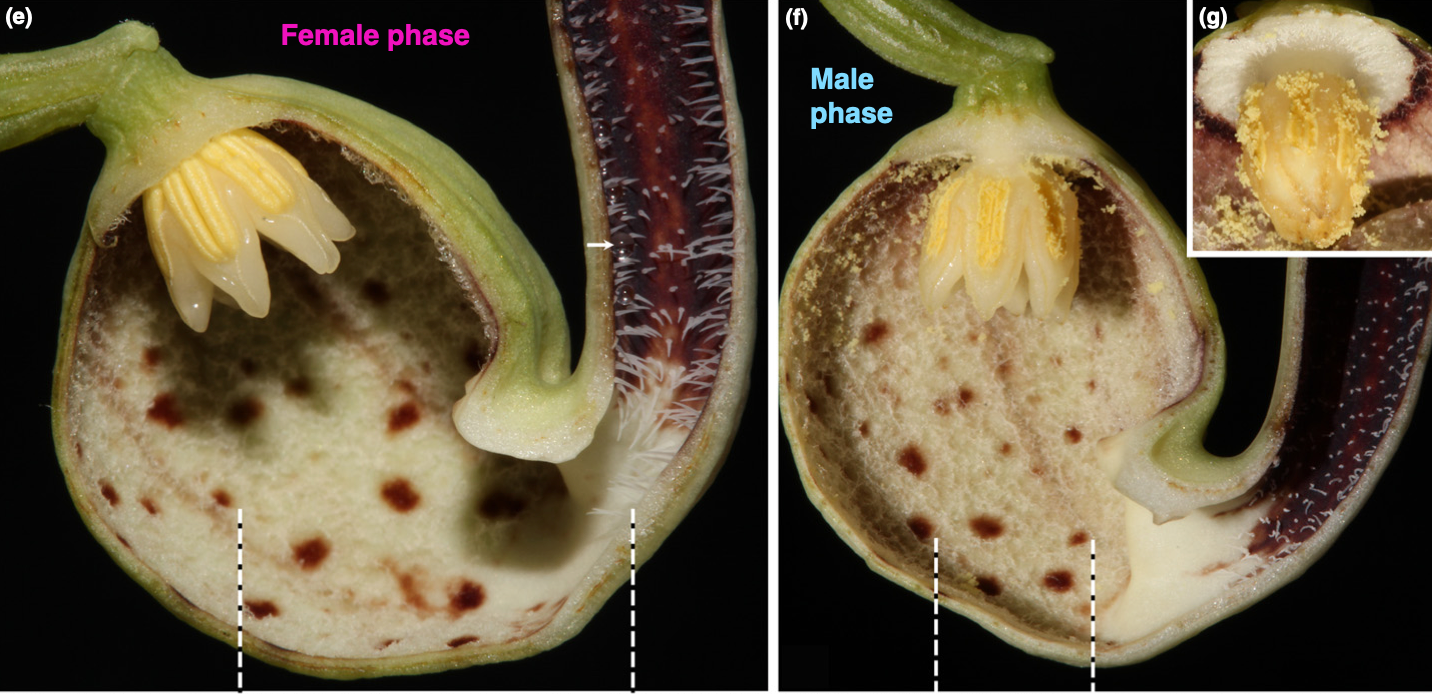
Image from New Phytologist (2015) 206:10–13, “Trickery flowers: the extraordinary chemical mimicry of Aristolochia to accomplish deception to its pollinators”
Pollen Showers and Release
Of course, entrapping flies somewhat defeats the goal of spreading your pollen far and wide, though it’s a great trick in terms of making sure as much pollen from the fly as possible gets smeared on your receptive female surfaces. And here’s where the true wonder of the trap shines forth. Deposition of viable pollen on the stigmatic (female) surface triggers some chemical events (this is common; then female surface literally hydrates the pollen, which then sprouts a tube and begins growing toward the ovary within). At least in a related species, Aristolochia rotunda (source), guests bumping into the female surface triggers… FIRST, the maturing of the anthers (male parts) and their shedding of pollen—thus coating the guest with packaged genetic material for another visit. Then the stiff hairs lose the water pressure that was holding them up, and the fly can now walk out the way it came in. During its enforced visit, it has deposited the pollen it brought with it and acquired more for further distribution.
I’ve not come across a mention of what happens if the guest brought no pollen, but in many cases like this there is a fail-safe mechanism such as proceeding with pollen release and path-opening after a period of time spent open; it's possible some pipevines work this way exclusively.
This mechanism is conceptually similar to beetle entrapment as practiced by magnolia flowers and cousins.
Seeds: The Goal of the Whole Operation
In the eyes of natural selection, the only real purpose in life is to mix some genetic material and initiate and disperse copies. In Dutchman’s Pipe, offspring take the form of a cucumber-like structure holding scores of seeds. Each seed is flat and roughly triangular, about a centimeter in width and height. Generally, flowering is done high in a tree (Pipevine vines are serious adept twining climbers), and as the enclosing cylinder cracks or springs open, dispersal is likely aided by the pair of small ‘streamers’ attached near one end of the seed.
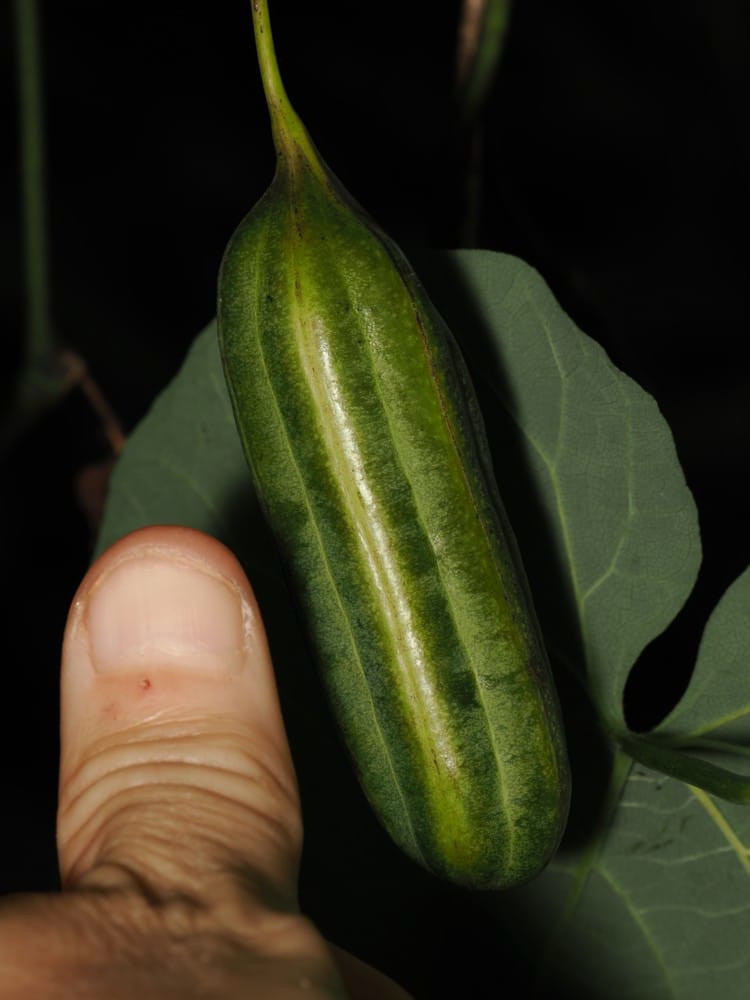
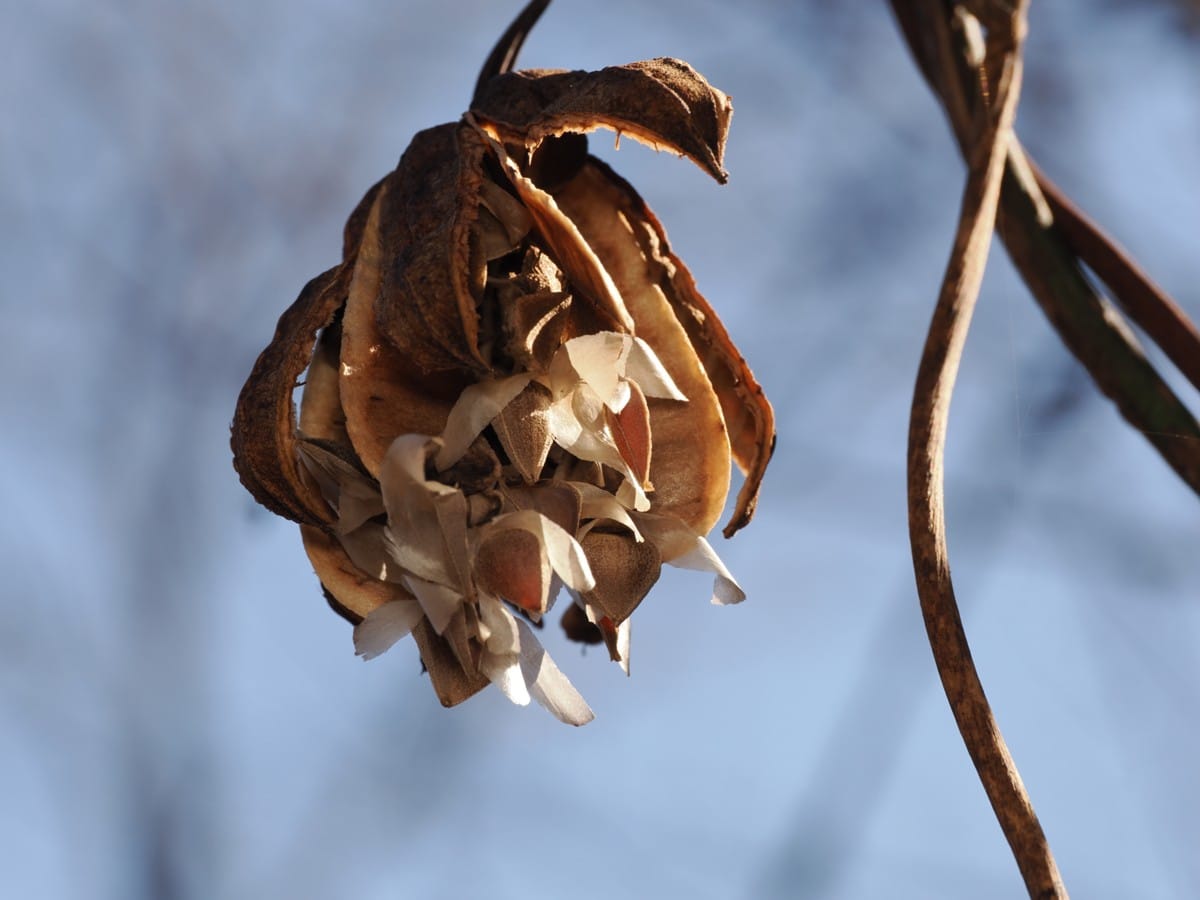
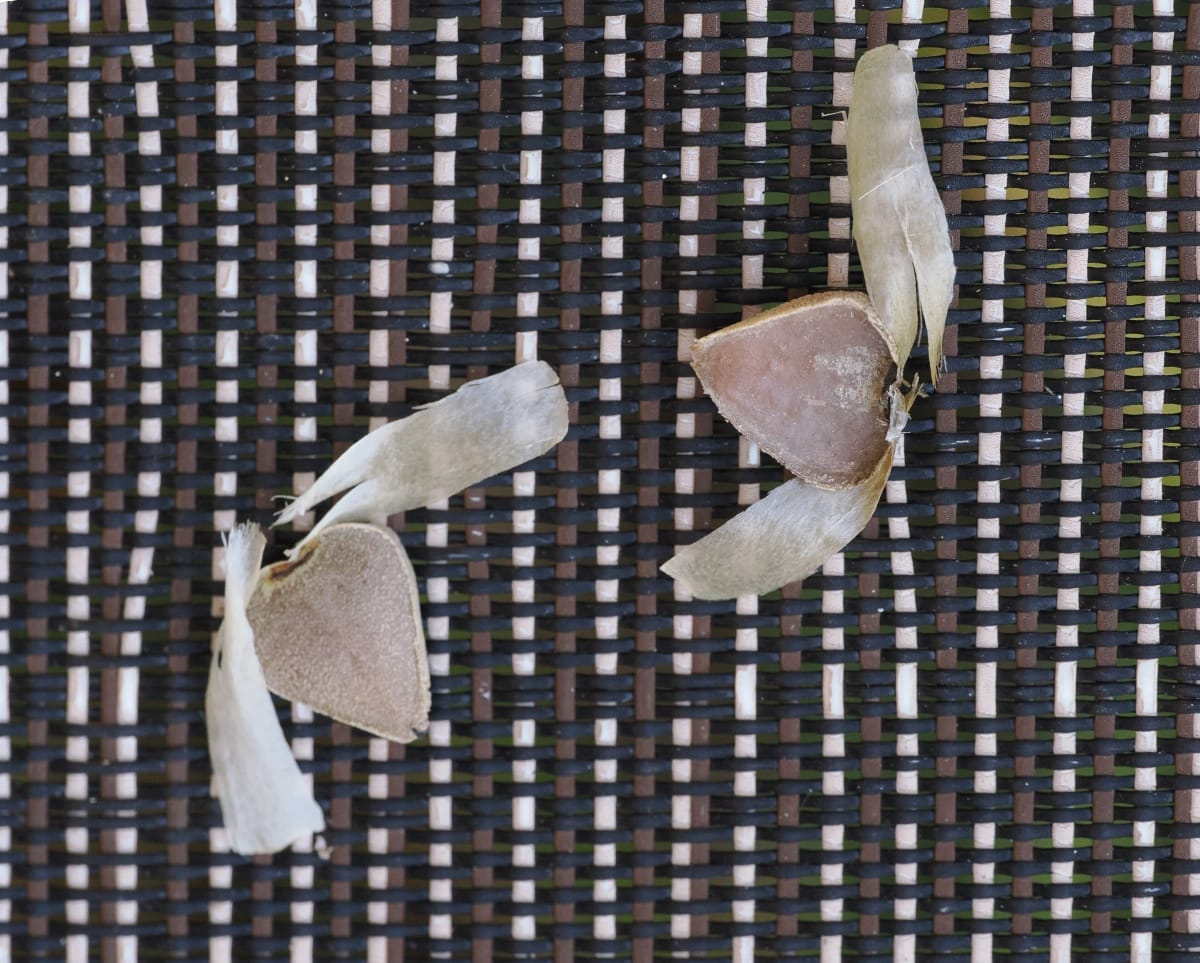
Maturing seedpod (left), dried pod that has cracked open and is dropping seeds, and winged seeds of Dutchman's Pipe
The butterfly connection
Dutchman’s pipe vines and leaves are toxic; this is presumably a defense against herbivores (side note: essentially every plant has physical or chemical defenses; not all are harmful to mammals since we may not be the problematic herbivores). Alas for plants, there often exist herbivores that have ‘cracked the code’ (Monarch butterfly caterpillars, anyone?). Not only can pipevine swallowtail caterpillars (Battus philenor) resist the toxin, they incorporate it into their own tissues, rendering them dangerous to their predators. This is the reason Pipevine Swallowtail caterpillars don’t bother trying to be inconspicuous and even advertise with orange highlights. Best of all, the toxins persist when the caterpillar undergoes metamorphosis and becomes a butterfly (pipevine swallowtails pictured) maintaining the toxic protection through ‘adulthood’.
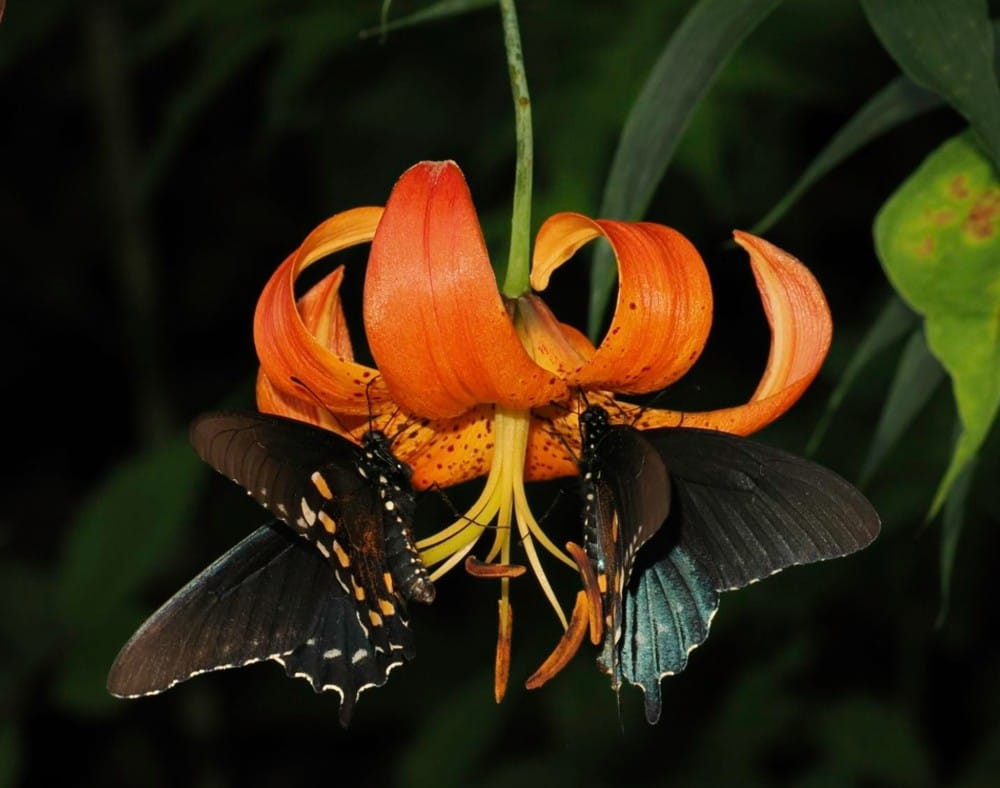
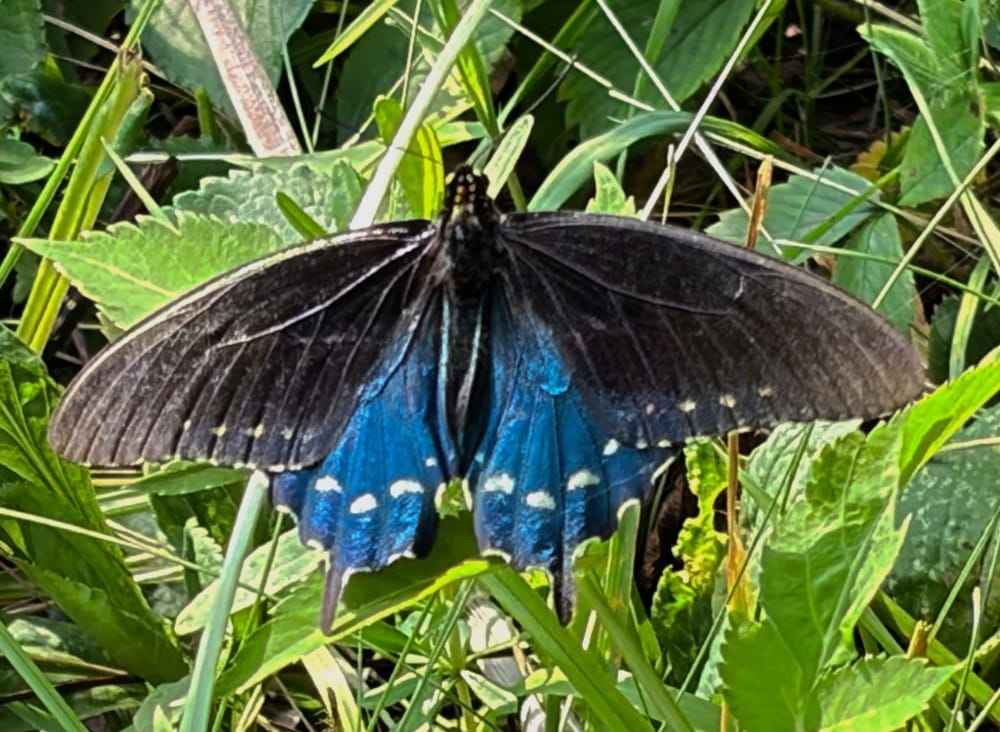
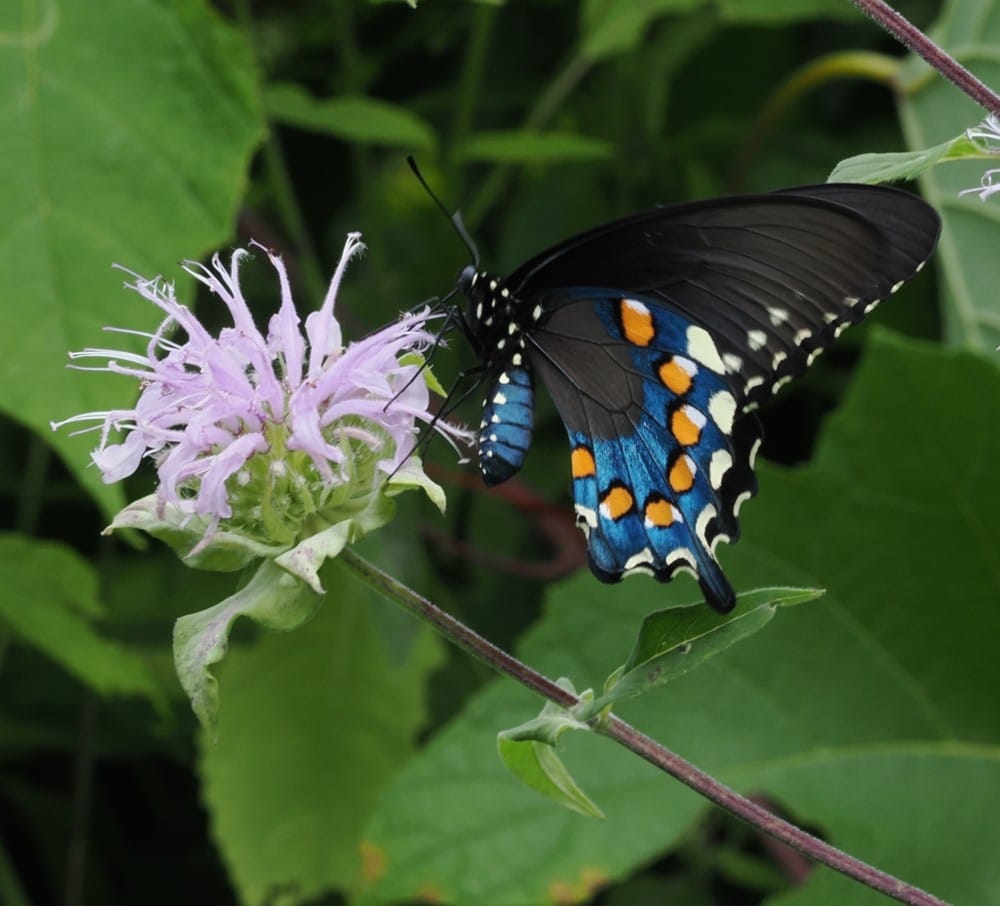
Pipevine swallowtail butterflies. The blue color is actually a 'trick of the light'; instead of being a classic paint-like color, the butterfly's wing surface makes light bounce around in such a way that only blue gets reflected. At the wrong angle, it doesn't show up at all...
Where the plot really thickens is learning that there are a handful of other butterflies piggybacking on the toxicity of Pipevine Swallowtail butterflies. You get all the benefit of being avoided by birds that have gotten a bad taste from the Real Thing without the troublesome expense of becoming tolerant to a toxin and filling your body with it. Butterflies in the images below are believed to have evolved similar coloration so they can be mistaken for pipevine swallowtails. For you verbocrats out there, the formal term is Batesian mimicry (one harmless species looks or acts like another which is harmful)... because of course there are several means and ends to mimicking. The toxic Monarch butterfly also has mimics: the Viceroy and Queen butterflies.
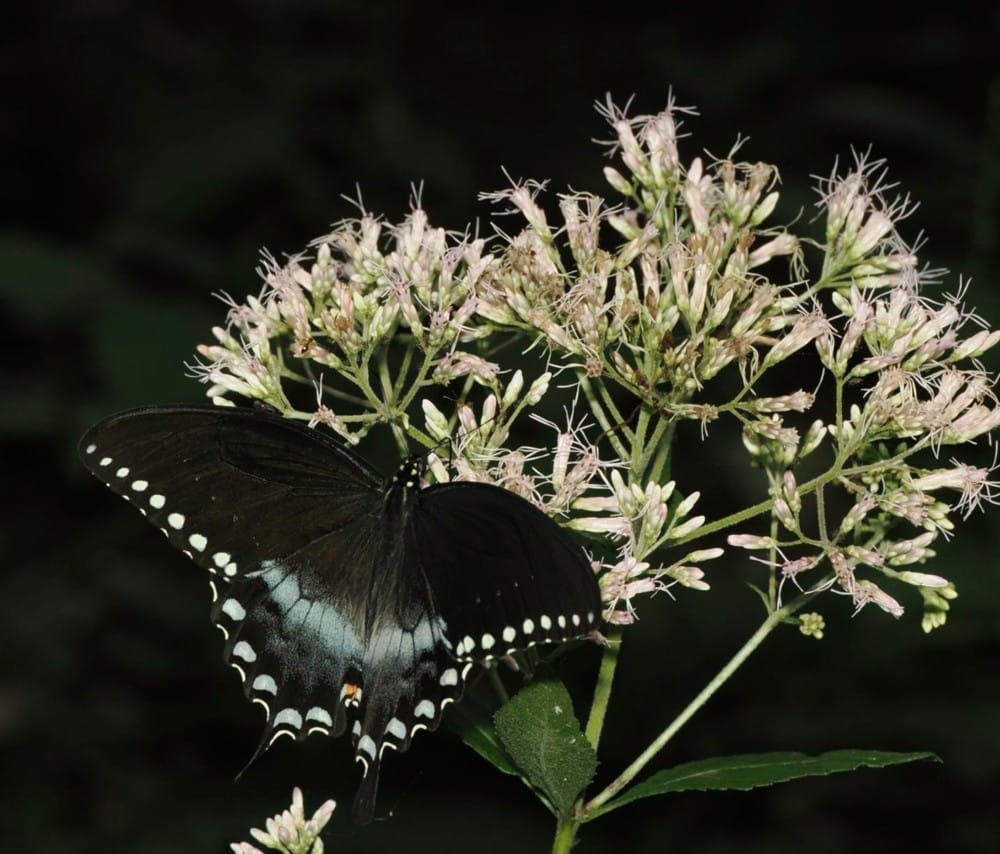
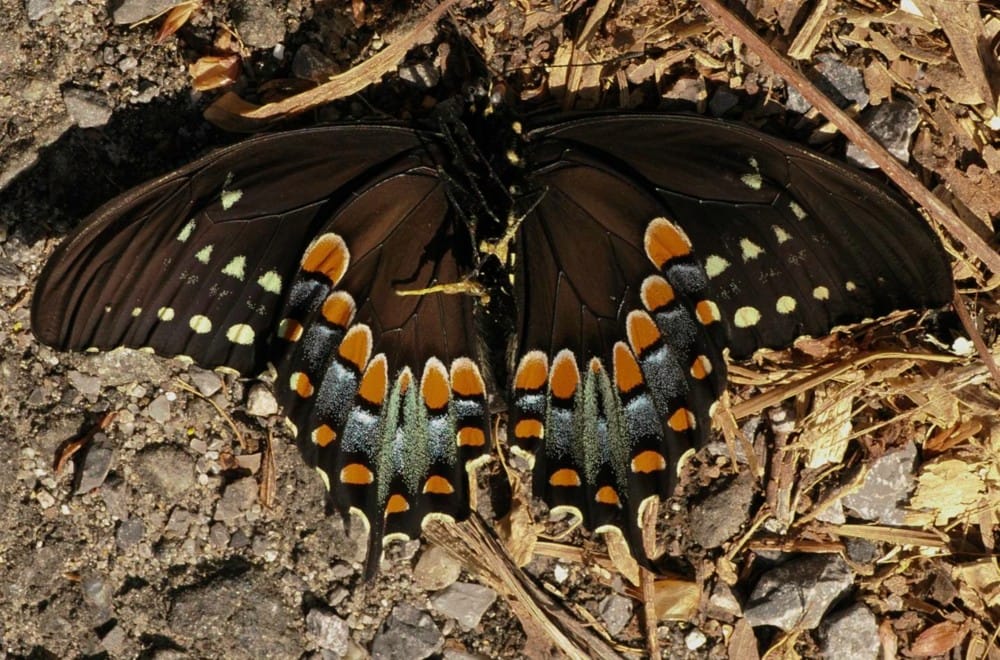
Spicebush swallowtail (the one on the right is a very cooperative... roadkill)
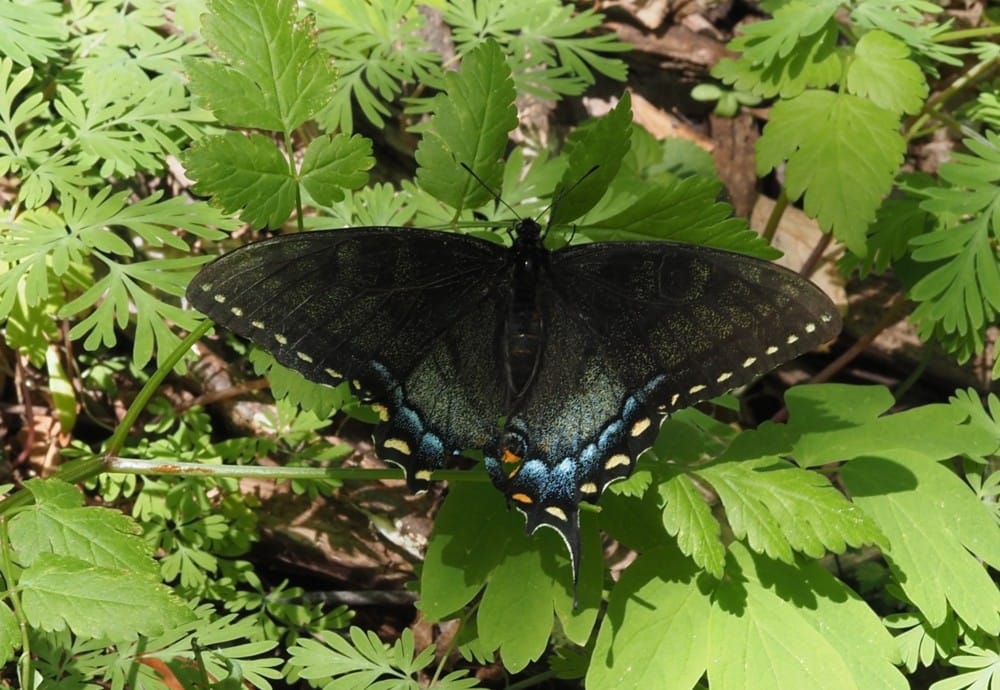
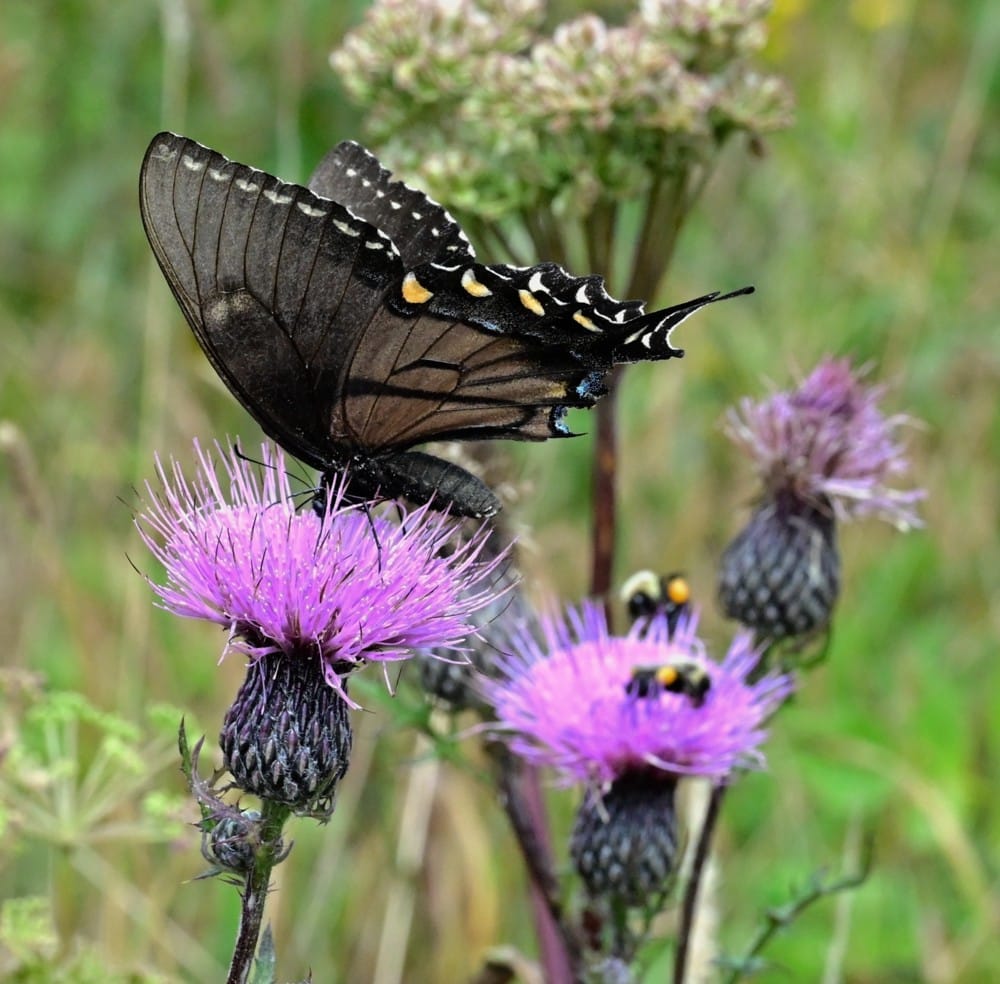
Black Tiger Swallowtail. This is a form ('morph') of the familiar Tiger Swallowtail; apparently only the females have this variant. If you look closely, you can see the regular Tiger patterning; clearly they're just 'painted over' yellow Tigers.<i class="fa-brands fa-creative-commons"></i>
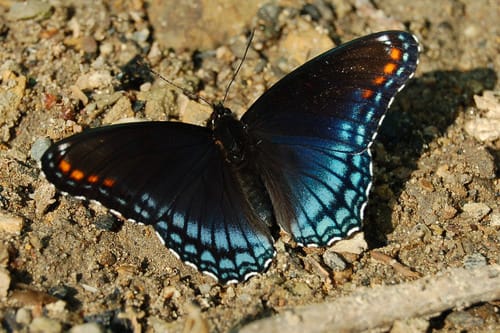
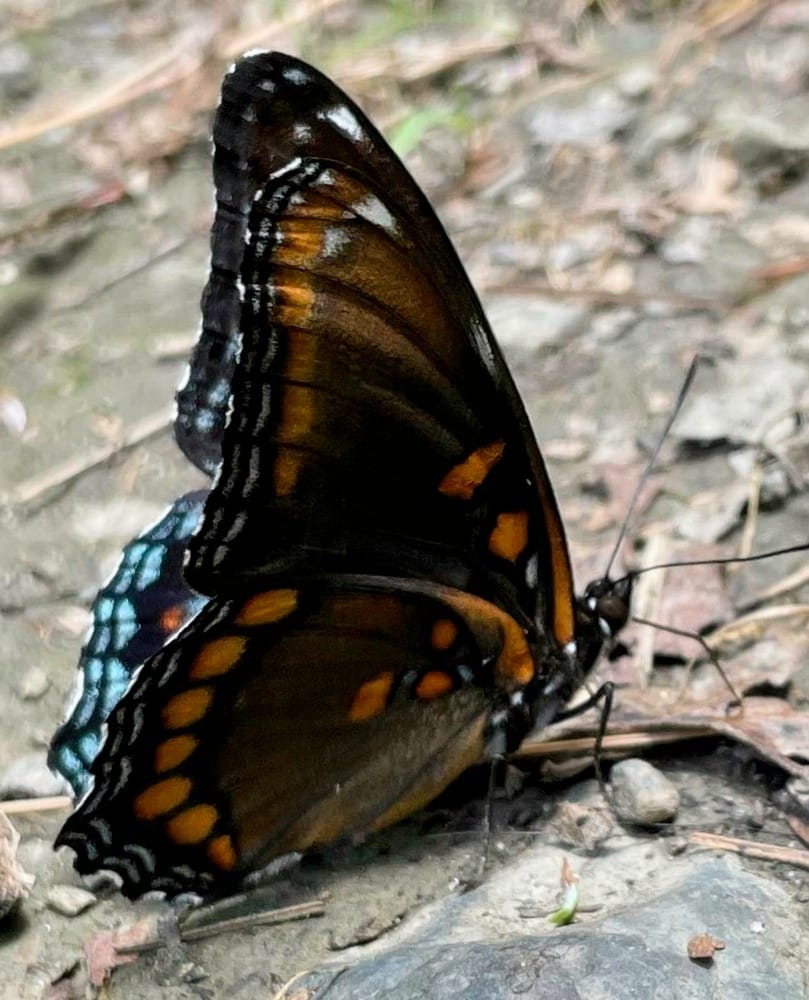
Red-Spotted Purple. First picture is by Flickr uses @myiarchus22
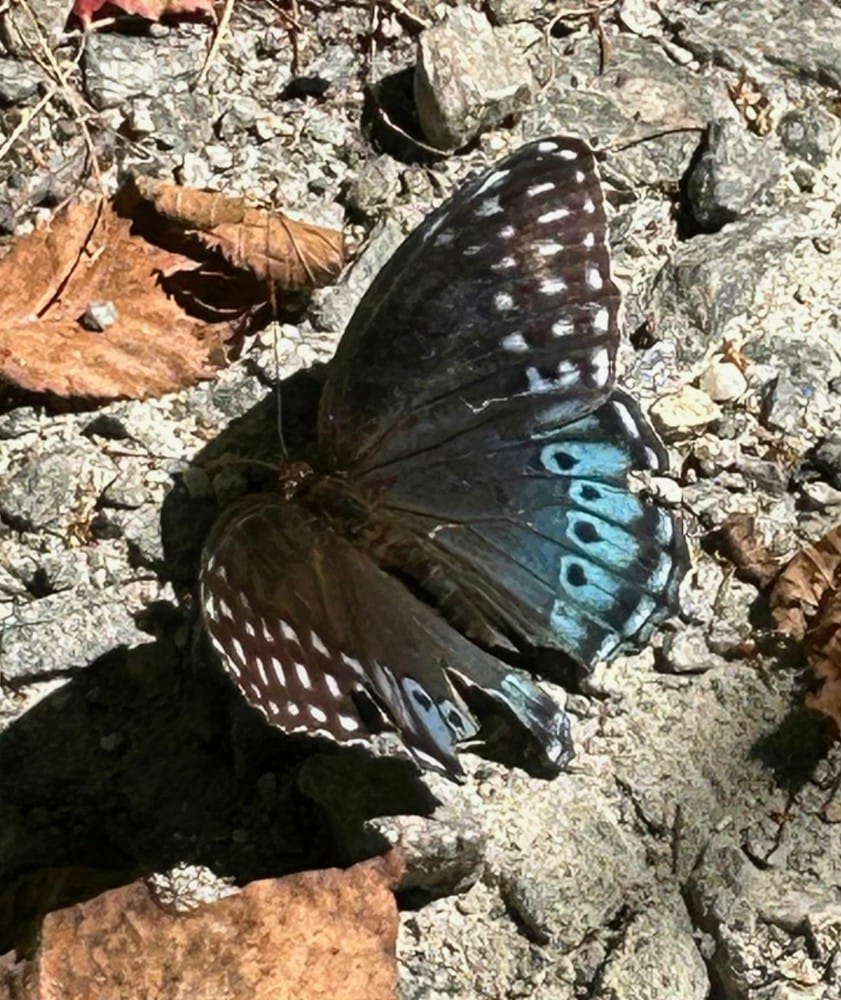
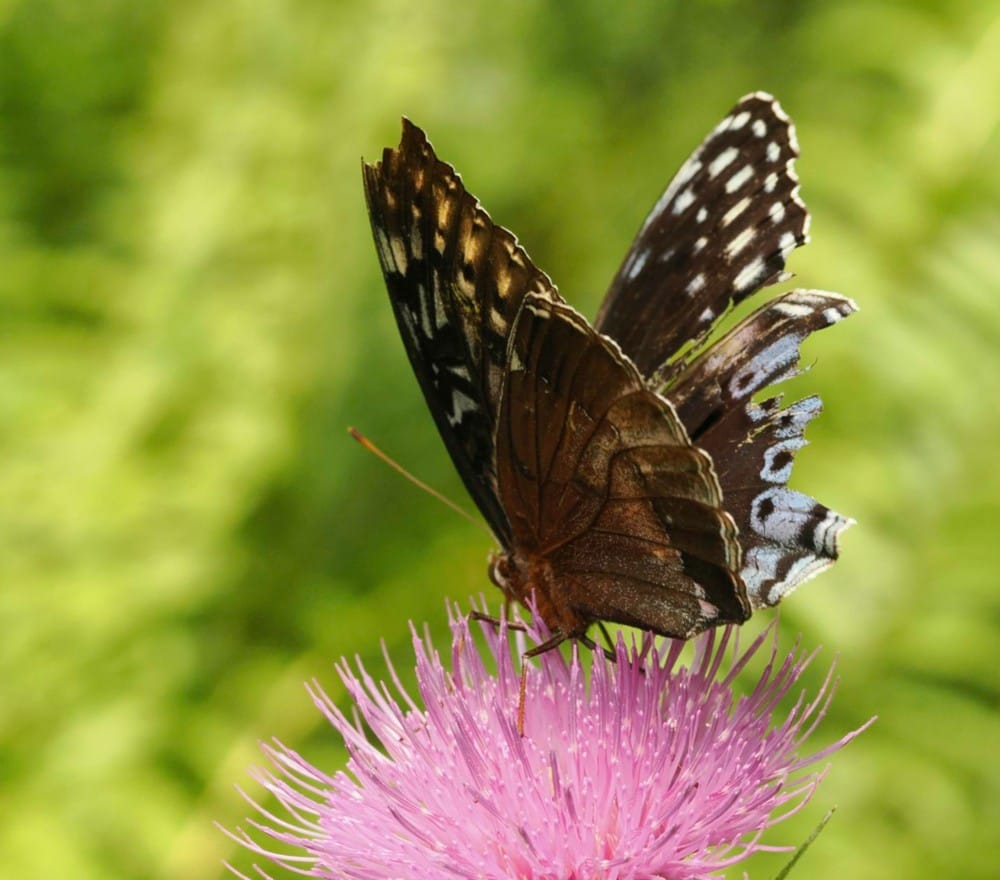
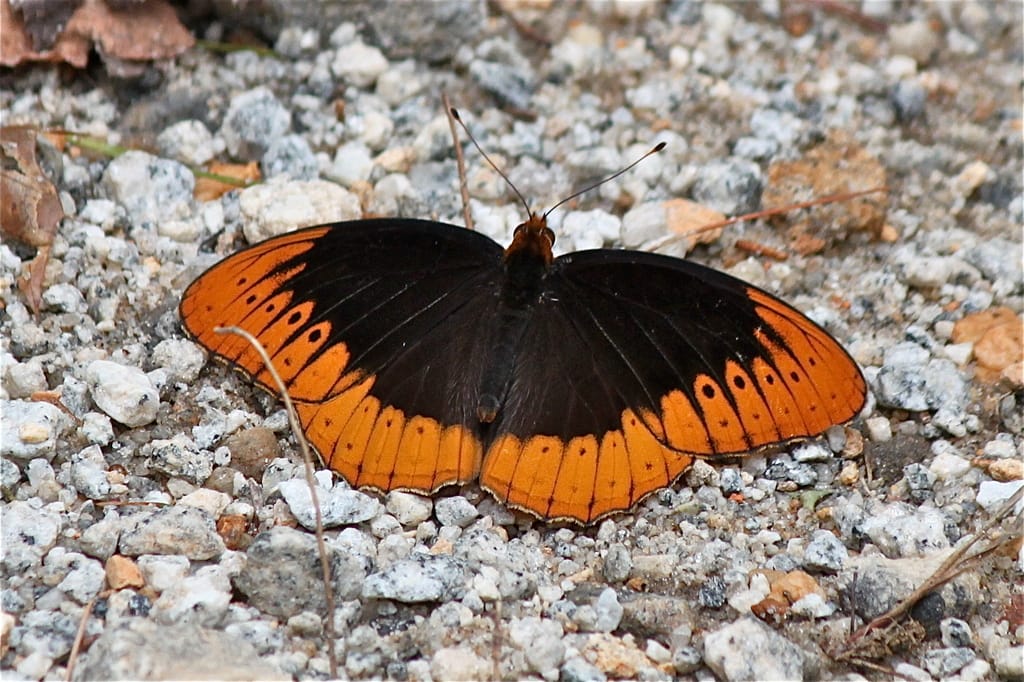
Diana Fritillary The last pic is from iNat user @Dennis220 and is of a male; in this species all the females are trying to mimic the Pipevine swallowtail, while all the males are distinctly different.
