

What’s in a Name
More names: these plants are also called Spotted and Yellow Mandarin
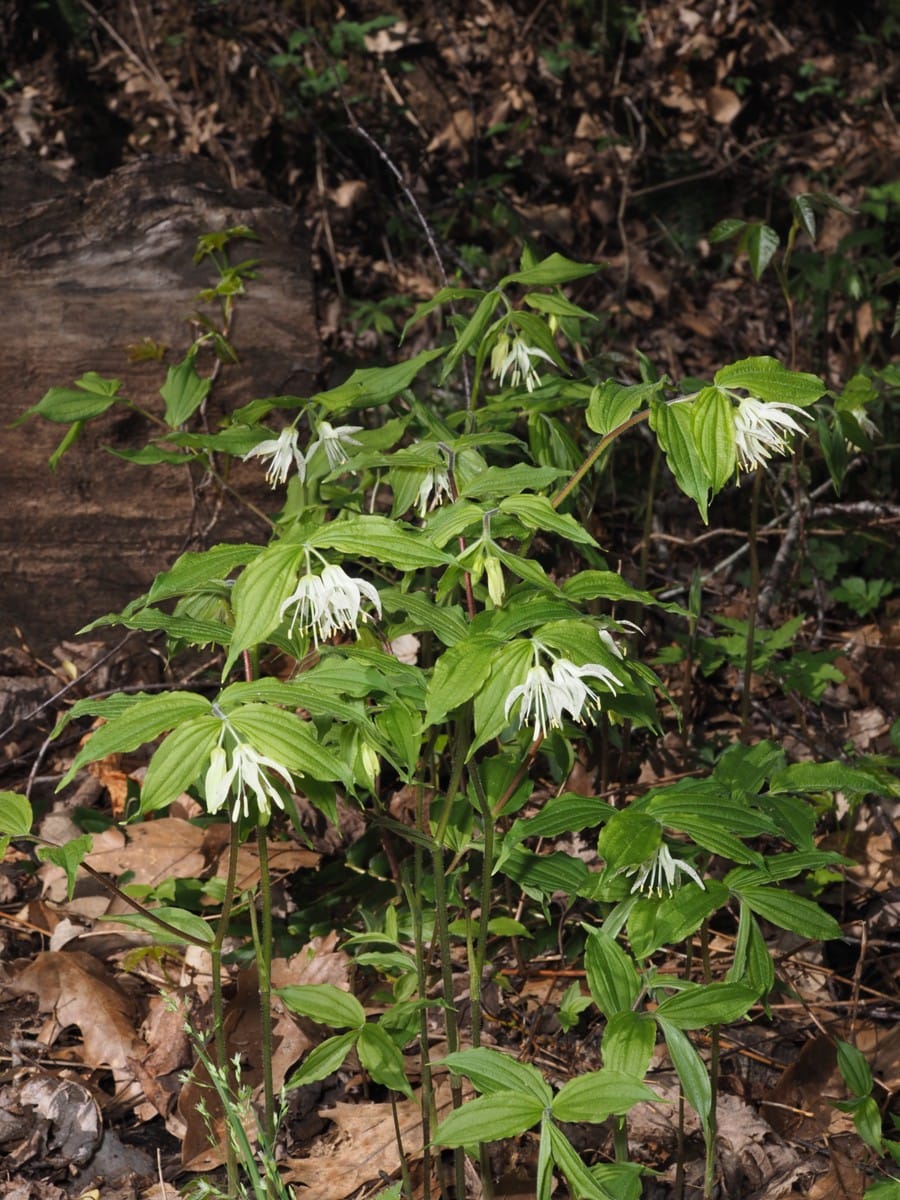
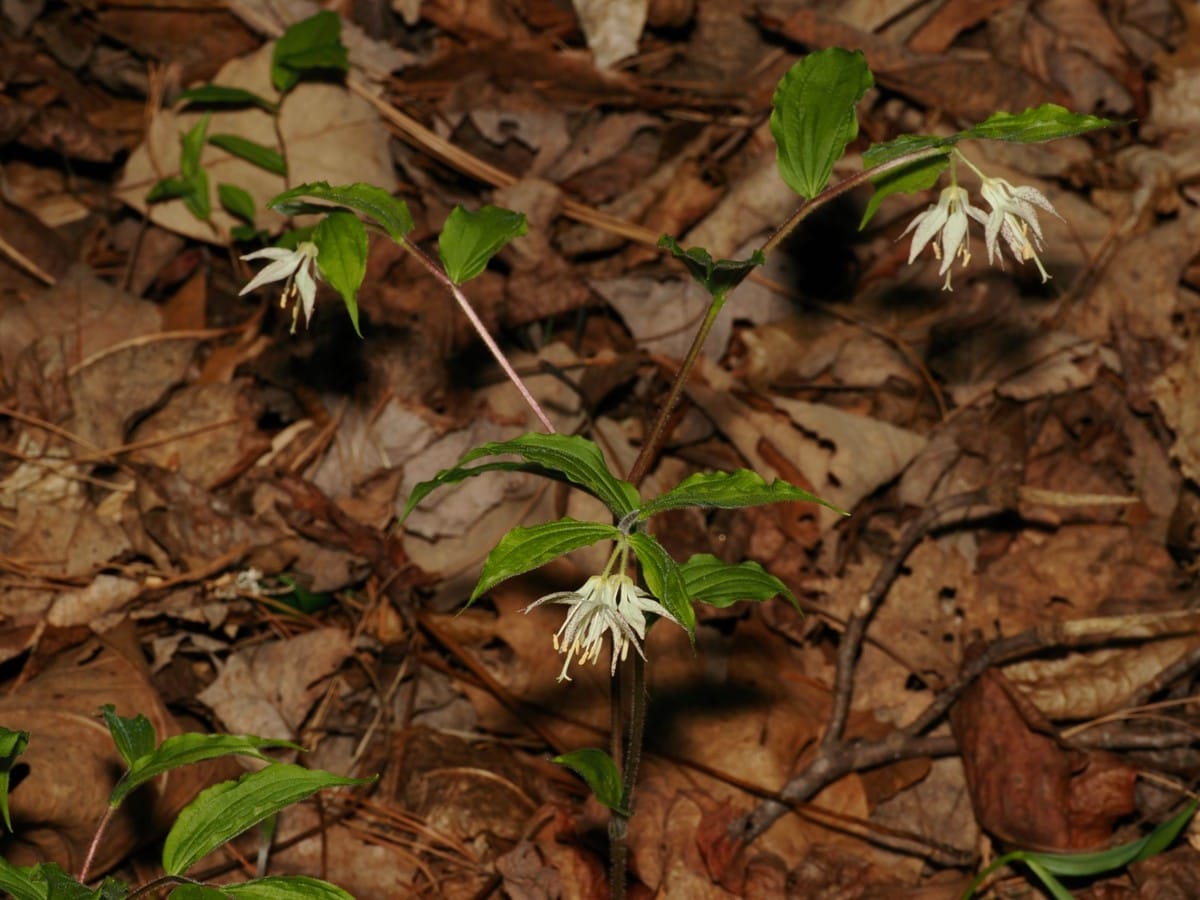
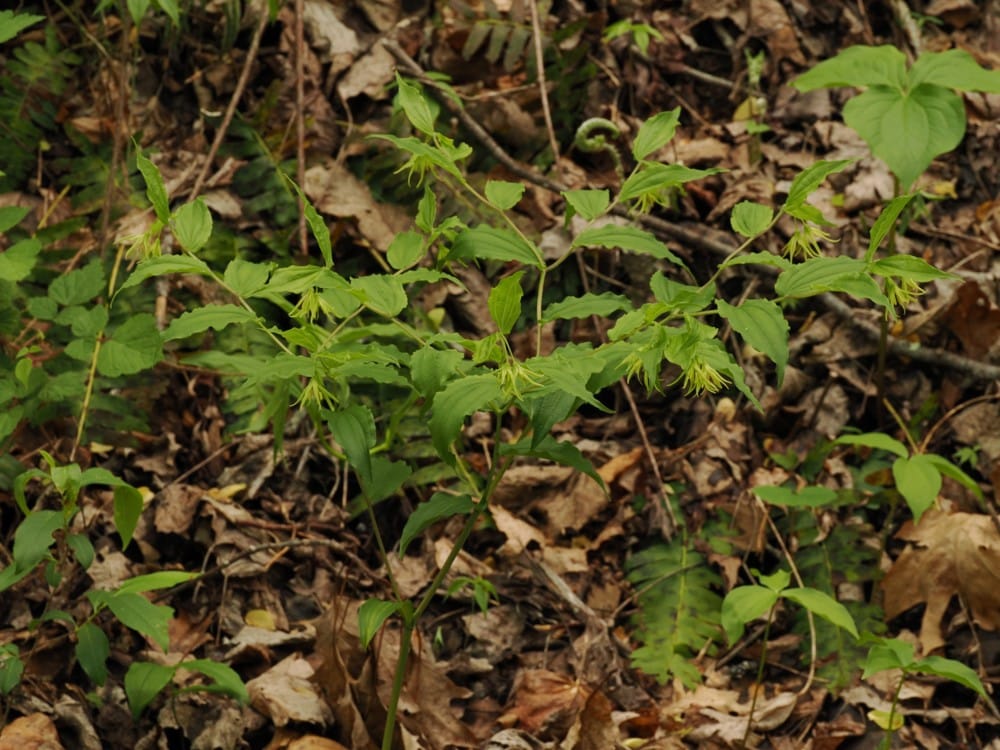
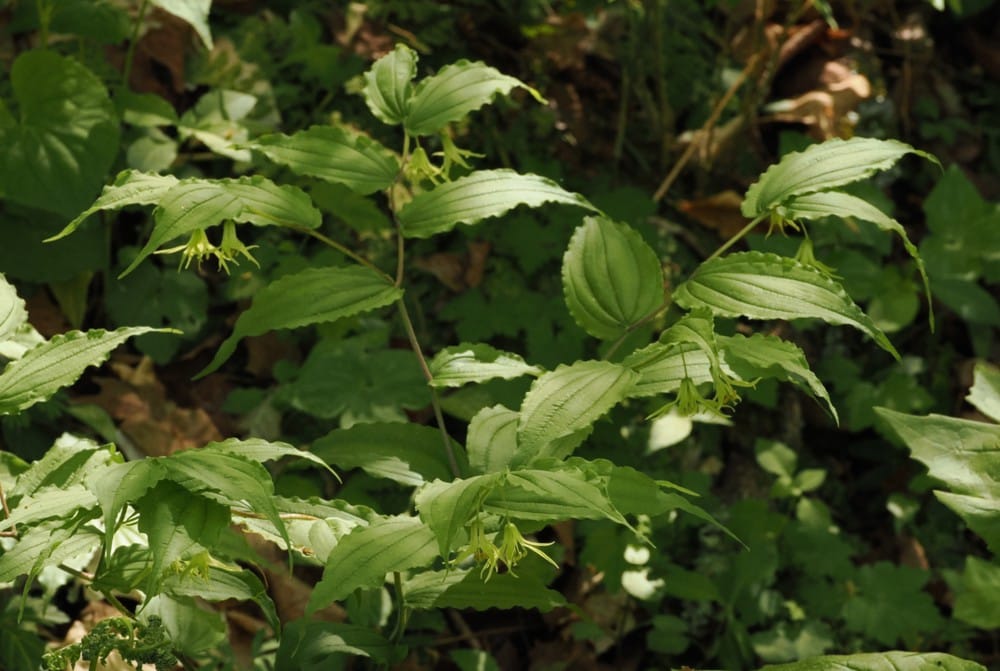
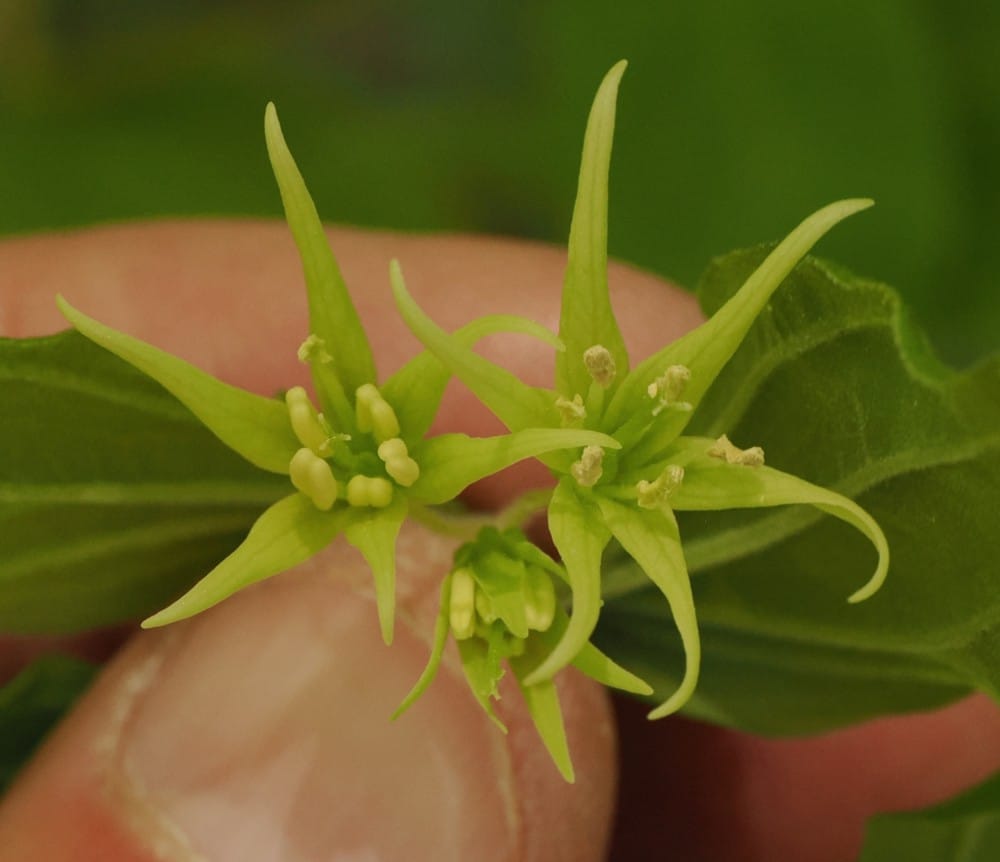
Spotted (first two) and Yellow Fairy Bells. Which flowers stand out better to you?
Glossary at page bottom
For a deeper dive, see the ?Species? page.
on this topic, the short form is the specific/SPECIES name is the unique distinguisher (maculatum or lanuginosum), and the next association 'up the ladder' is the general/GENUS name (Prosartes). In terms of branches on a tree, species is the leaf at the end of the branch, and Genus is the smallest type of branch; the one that holds leaves. The next bigger branch is called Family, in the case of our two cousins, they are members of the family Colchicaeae.
Overview
These two are indeed cousins (they are in the same Genus)—as close as two groups can be without being the same one (Disclaimer: there is inevitably a fair amount of human subjective judgment in classification). Structurally, they’re very similar—both plants have a single stalk with foliage emerging in an umbrella-shaped structure, both display downward-outward facing flowers of similar size with six petals, six long (male) stamens and a 3-lobed (female) stigma (all consistent with monocot/lily group membership). But Spotted is eye-catching, with dozens of red-purple spots on bright white petals, while Yellow's flowers are almost wholly yellow-green, barely different from the leaves that surround them... and I've seen many being visited while the petals are only just starting to unfurl. The two are often found growing in overlapping areas, though the yellow form is far more abundant, commonly growing in the absence of its cousin. While looking at the pics, notice how much the spotted fairy bell flowers stand out, even ‘facing’ downward… and how little the Yellow do (they're in full bloom, with 10+ flowers).
Flowers
A flower has a number of methods of attracting guests; obviously their first job is to 'reach out' over distance to catch the attention of wanderers. There are two senses that work here: sight and smell (sound would be extremely cool, but I've never heard of a flower that's evolved to use this approach). Spotted clearly offers a lot in this regard– bright white petals, broken up by vivid, contrasting purplish spots. The flowers 'point' downward, but often present a good amount of color viewed from the side as well.
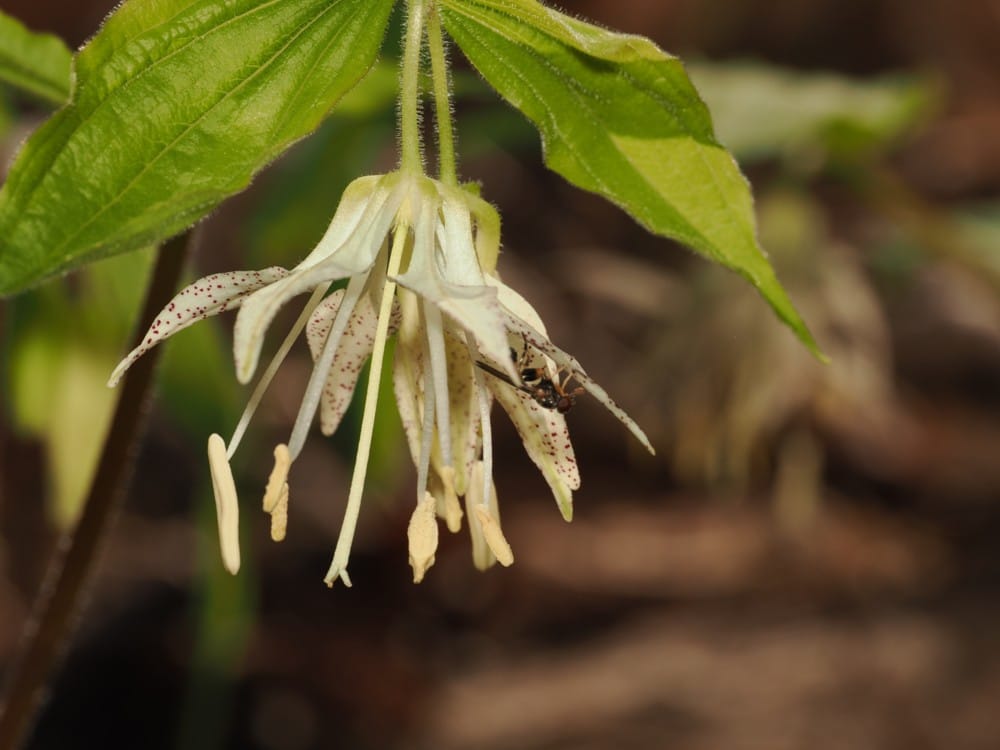
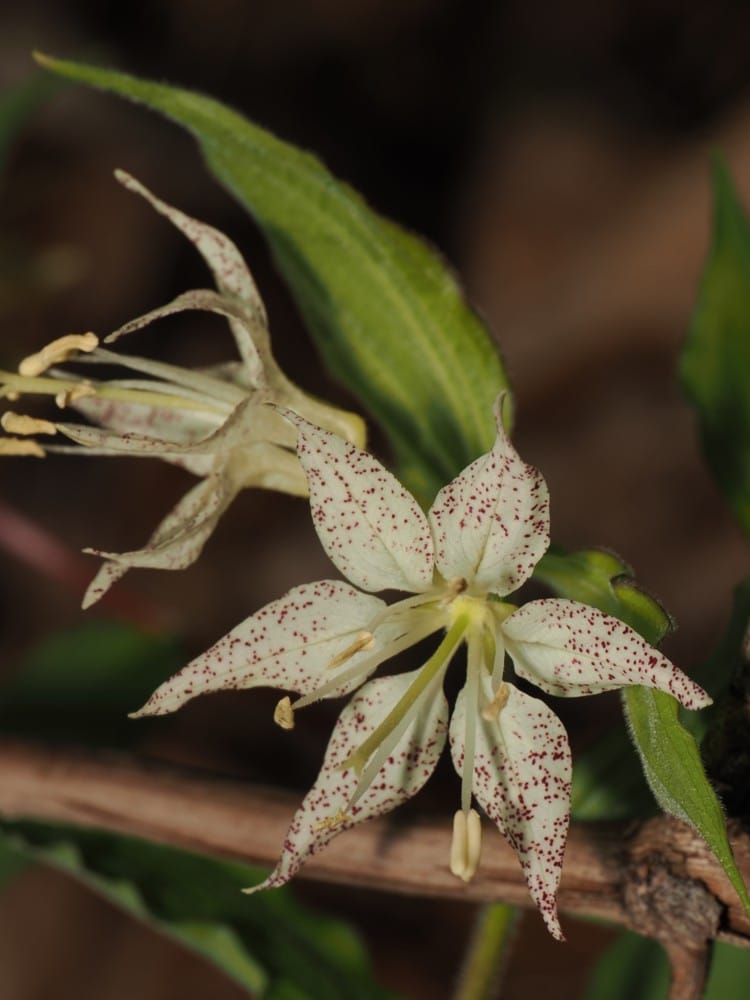
Spotted Fairy Bells (Prosartes maculata)
On the other hand, Yellow appears to be a visual loser. Especially when they first open, the flowers can be difficult to distinguish from foliage, exhibiting an unexciting uniform green color. Some plants don't go much further; others achieve a more interesting yellow look. At no time are Yellow flowers as easily distinguished as the Spotted, especially at distance... at least to human eyes. Bees and some birds do have the capability of seeing colors imperceptible to humans (UV wavelengths), but using a camera set up to 'see' these colors does not demonstrate anything 'distinctive' that could alert bees.
As we're inevitably heading to a discussion of pollinators, it's worth pointing out that Bumblebee flowers tend to be horizontally oriented and stiff, as well as featuring some sort of landing platform so the big guys can work stably and in comfort. Pendulous flowers often serve hummingbirds because hummers are strong and skilled hoverers. However, hummer flowers tend to be red, and significantly higher off the ground. In my experience, hummingbird flowers are often right at the end of a branch, as opposed to hanging underneath foliage as here.
UV illumination: nothing to see here
Comparing images shot using ultraviolet wavelengths reveals no interesting markings or distinguishing features on either plant. Most plants that are UV marked have a dark central 'target' blotch and/or 'landing stripes', both of which are meant to guide insect pollinators to the action. The dogwood flower does the reverse; the central flowers are bright (reflecting UV) and the 'petals' are dark. Skin reflects some UV, so represents moderate reflection; note how much lighter it is than the petals.
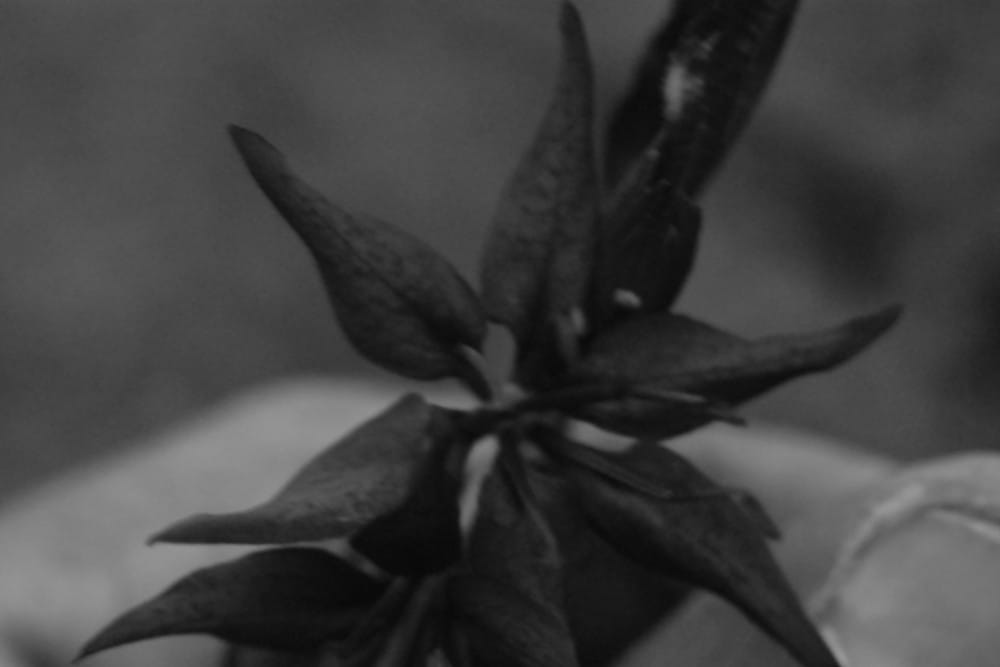
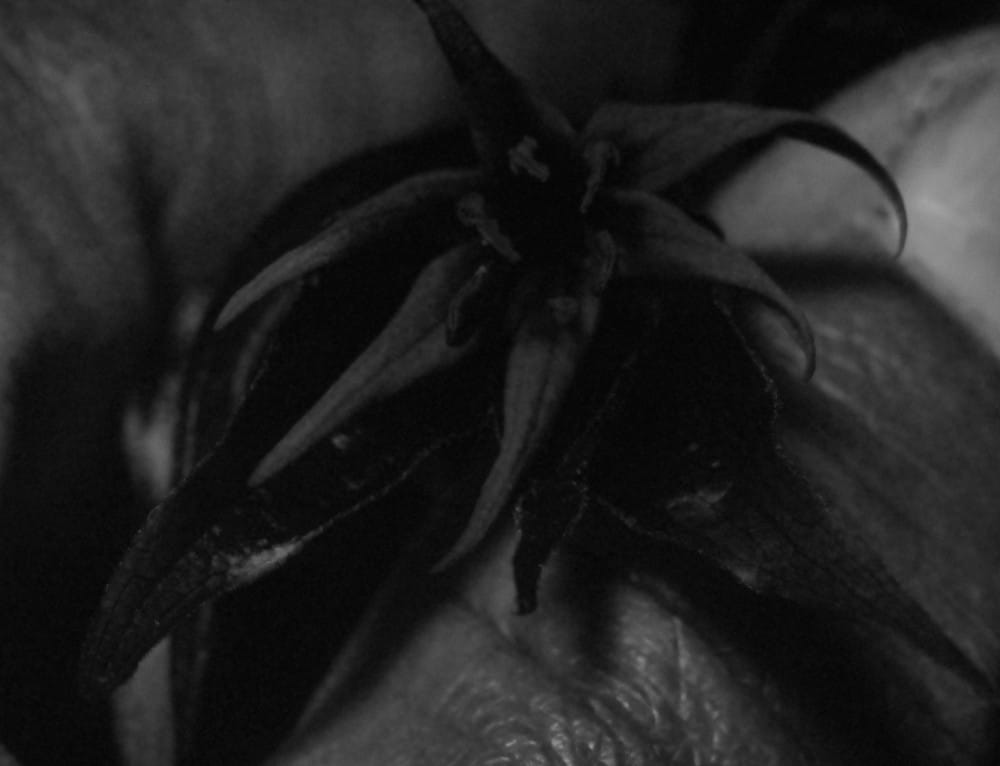
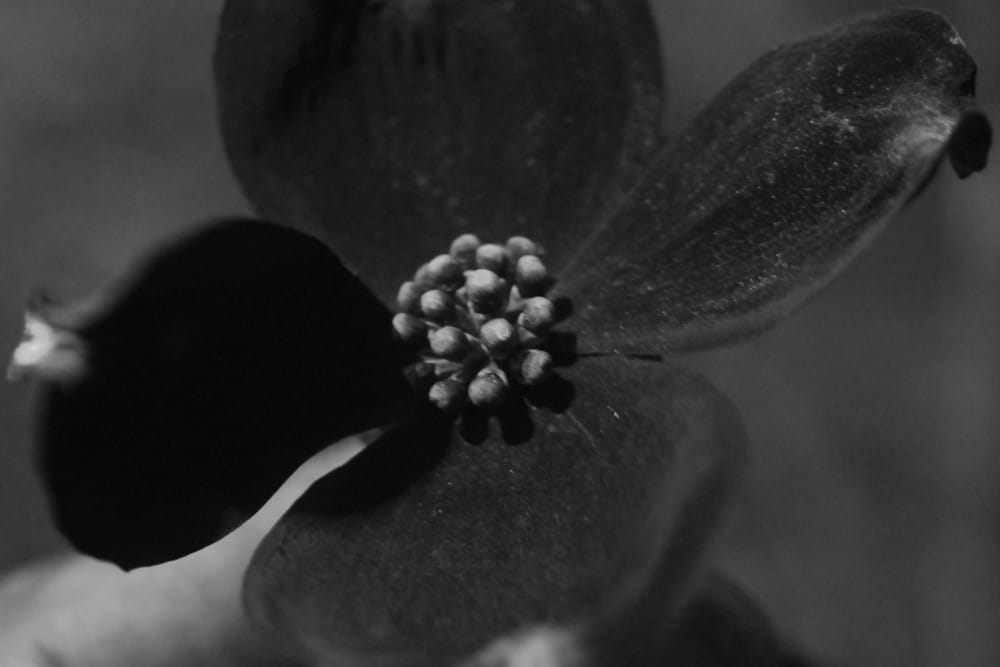
In order: Spotted Fairy Bell UV image; Yellow Fairy Bell UV image, and Dogwood UV image, showing contrasting center.
So, why do guests come to Yellow's flowers? They clearly do; it's not that hard to find small bees visiting them, and all the patches I know of set abundant fruit (Disclaimer: this could reflect an efficient self-pollination mechanism). So if Spotted is so clearly seen at-a-distance, and such a vivid visual stand out, how does yellow exist? If Spotted held all the cards, we would expect it to succeed so well that it eventually displaced Yellow, especially since the two appear to have overlapping sun and soil requirements. But Yellow is the more abundant.
=> Many insects have far better scent detection than humans do
=> I fear that I in particular may have a fading sense of smell (if you've ever detected scents from either Fairy Bells, please let me know!)
=> Flowers tend to be economical, producing scent only when visitors are expected. Most moths fly at night, and I'm rarely in the woods after dark... on the other hand, most moth-pollinated flowers are white, in order to squeeze out every bit of visibility possible.
Differences accumulate: seed packaging
Reproductive success has two distinct phases: fertilization/pollination, and distribution of resulting embryos (packaged with fuel and covered by a seed coat, and perhaps a berry as well). Once again, we are met with divergence. Seeds of Spotted are visually inconspicuous. While the fruits have a distinctive shape, they're dangling underneath the foliage and appear in un-ornamented green.
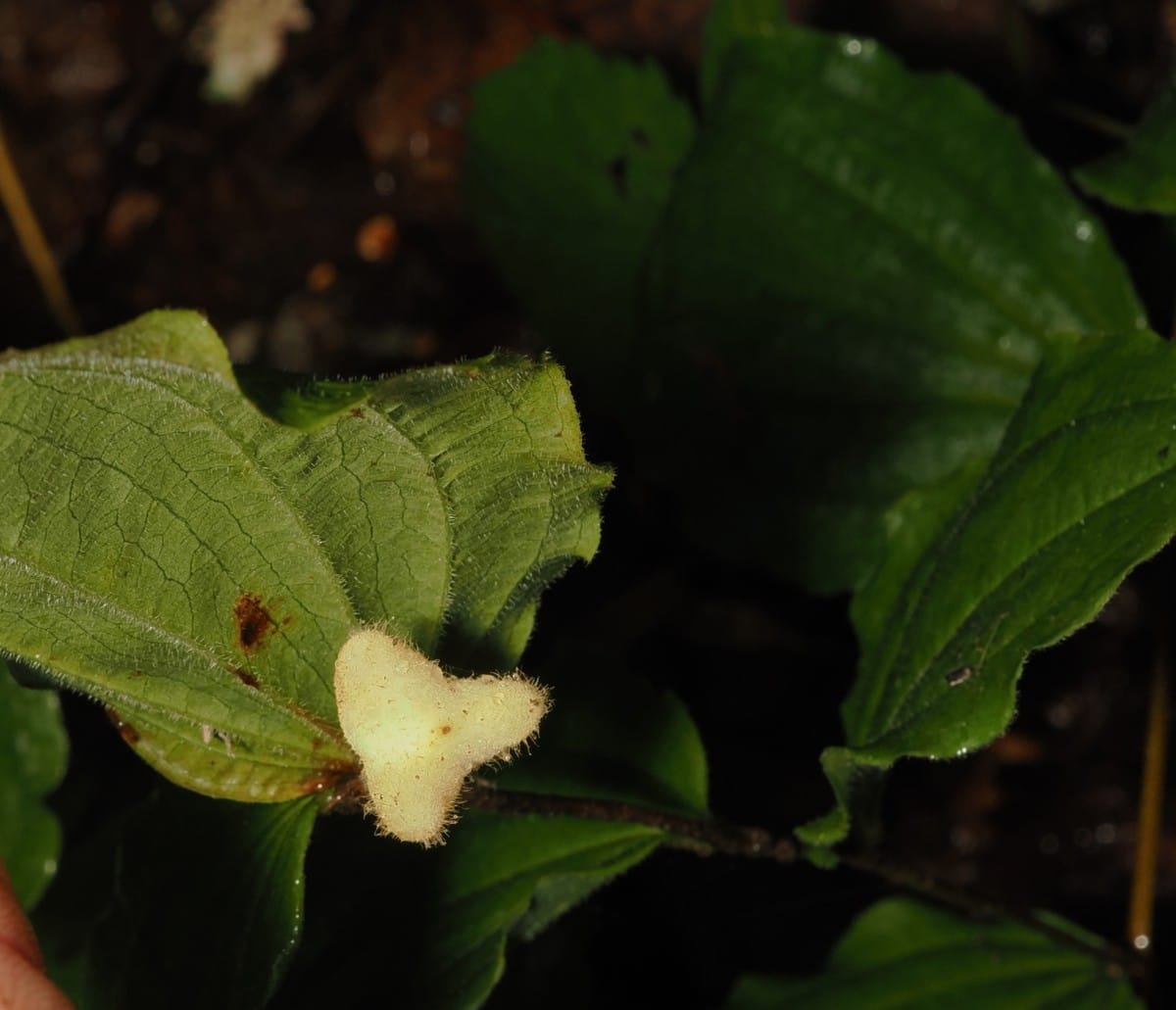
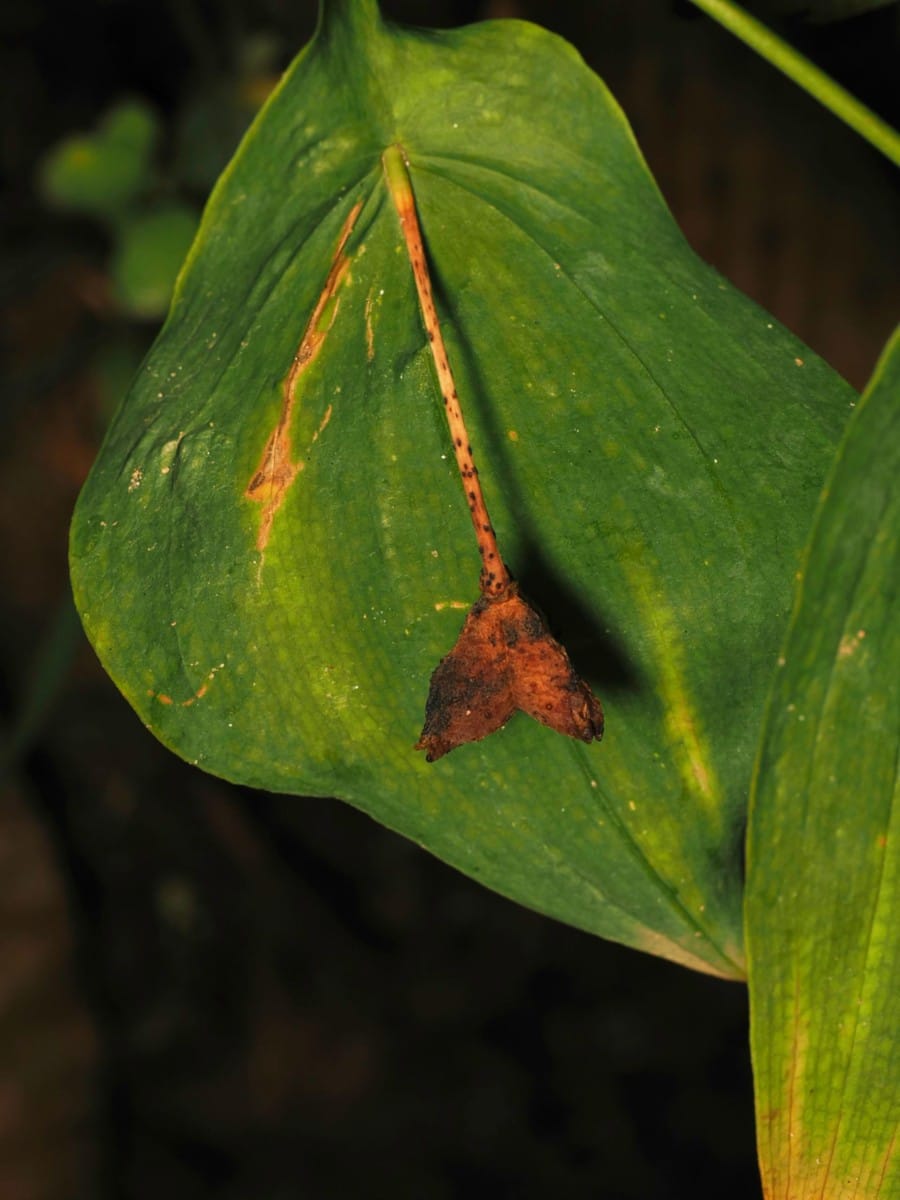
On the other hand, the berries of Yellow are a shiny red-orange, extending from the tips of the plants. It seems clear they have a desire to be seen, and birds and box turtles in particular are 'good' at seeing in the red range, and red has come to be a meaningful signal, at least to birds.
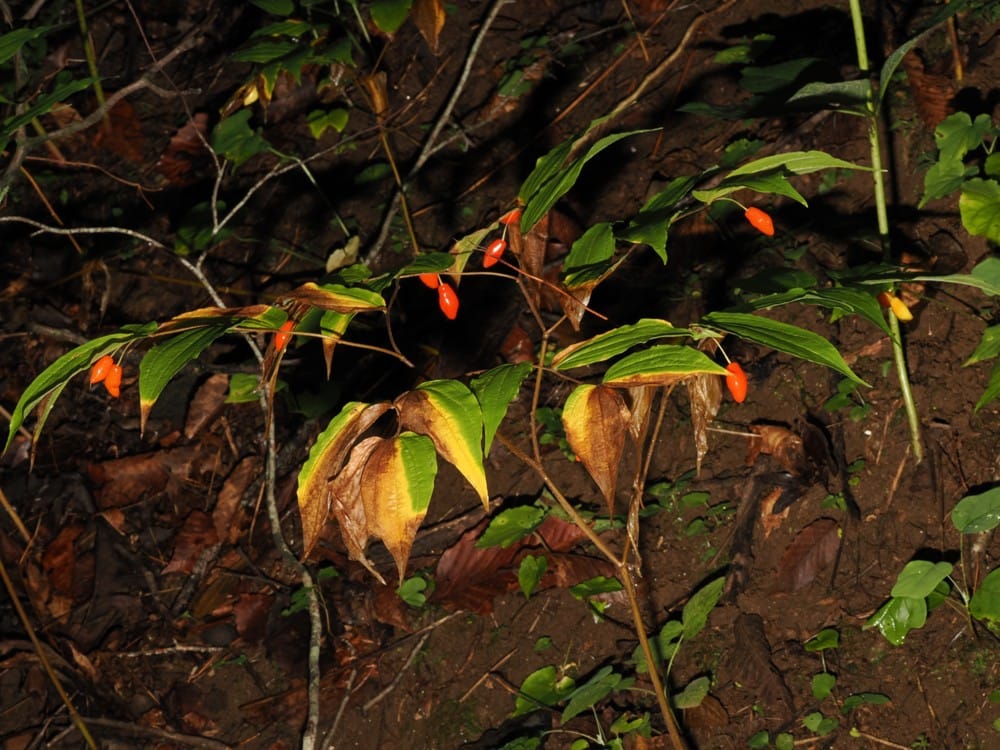
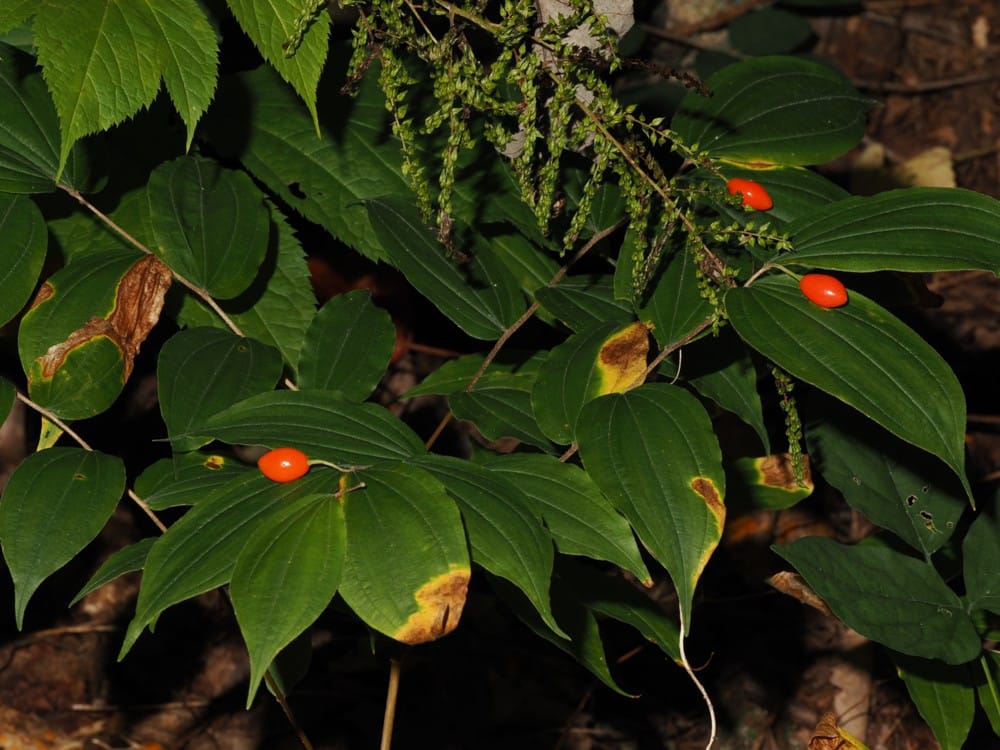
Bright red-orange berries of Yellow Fairy Bells
It's worth noting that I've never seen Prosartes that looked like a hybrid between the two (hybrid = resulting from a cross between two different groups, very often having intermediate characteristics). Given they regularly appear relatively close to each other, this implies that successful transfer of pollen and production of seeds is uncommon. Possibilities include 1) their insect pollinators rarely visit both on the same day and/or 2) genetic differences render cross-fertilization unworkable or any resulting hybrids are sterile.
For what it's worth... some pollinator-on-flower pics I've taken. A work in continual progress! This is another aspect that makes progress in botany difficult--by and large, floral observations and experiments are only accessible a month or so out of the year!
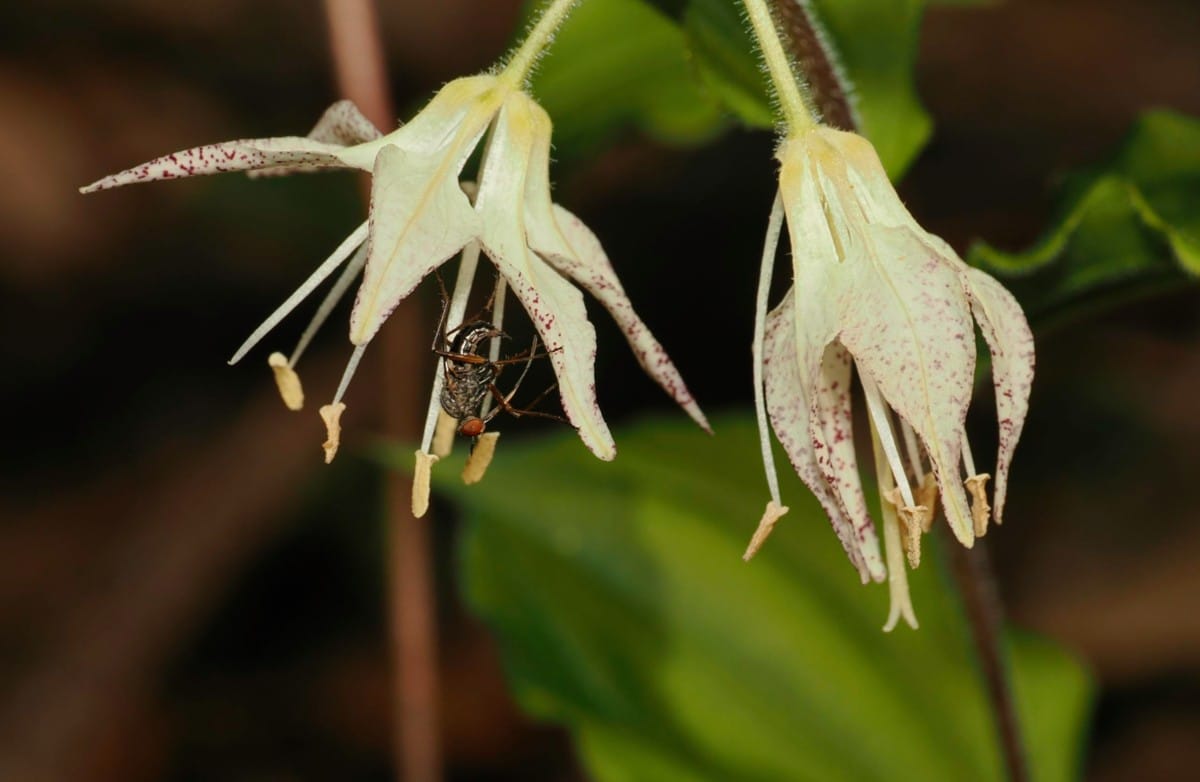
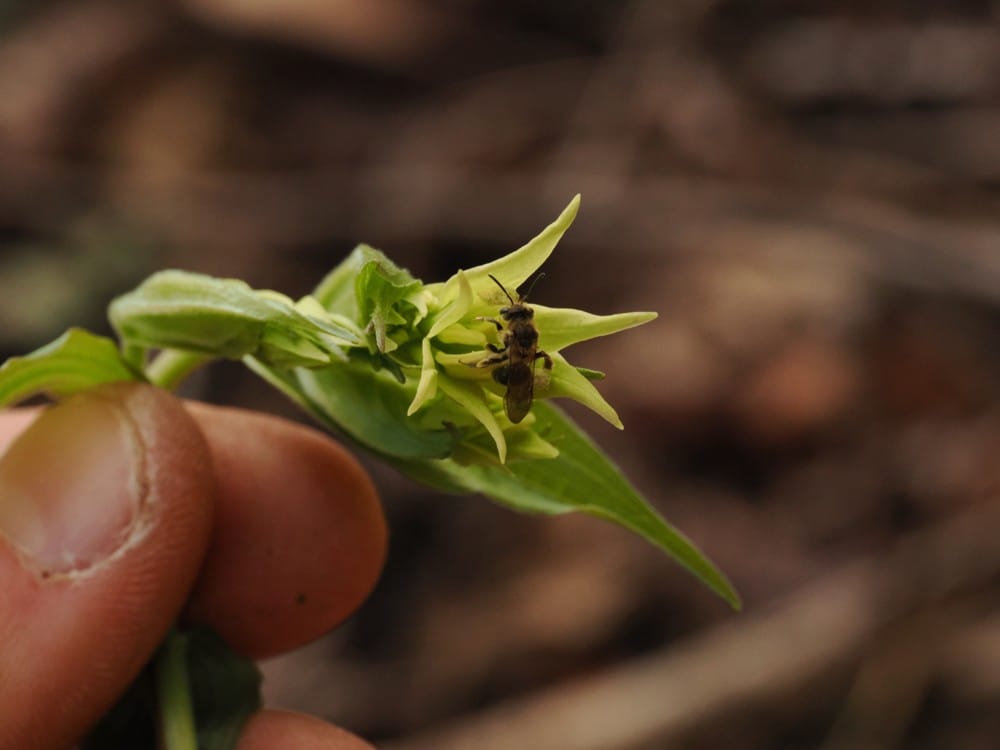
I believe the fly on Spotted is an Empis species (fly); look at that long proboscis! At right is... some kind of native bee on Yellow. Note that the flower isn't even fully opened yet, again suggesting (to me, at least) that the bee found its way by scent.
