
Any field that specializes in deep study of a topic develops a focused, dedicated vocabulary. This has two advantages for those in-the-know: a dedicated term can provide specificity and precision, and it can also save a ton of layperson's words that would be necessary to provide the same meaning.
Alas, for those of us on the outside of the bubble, specific terminology creates a constant barrier to understanding. In writing a blog intended for everybody but focused on specific details of flowers and plants, I've had to choose my compromises. Ideally, I'd have illustrated glossary terms readily available. The best approach, IMHO, is the one taken by the GoBotany species descriptions and keys: every technical term used can be touched to see a pop-up window offering a helpful definition, generally accompanied by an illustrative sketch. For the moment, at least, I'll be linking to their illustrated definitions, i.e. stigma. You'll need to close the browser tab that opens to get back to the blog.
 L.
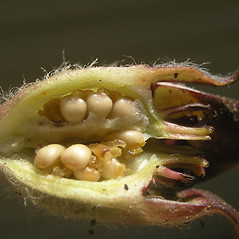
Example of a GoBotany entry for Hydra Ginger; click to see the whole entry
While GoBotany focuses on wildflowers of the NorthEast, there is a ton of useful overlap with the Appalachians in general, so I'm working to add a link to their site's entries wherever applicable.
I'm experimenting with linking specific terms as they are used in text. A conundrum here is that I can't automate this, so I'll likely try to introduce a term a few times as well as keeping a general link co the glossary. For this reason, the blog will be best read oldest-to-youngest, as my first use of a term will be the post with the most instances of definition use (I well know that having only a single introduction of a term is largely unhelpful!).